Water damage restoration quotes should identify the emergency work, equipment and further tasks proposed. Ask what the contractor has assessed and what remains unknown. Where urgent safety measures are necessary, avoid delaying professional assistance simply to complete a price comparison.
The decision this article helps you make
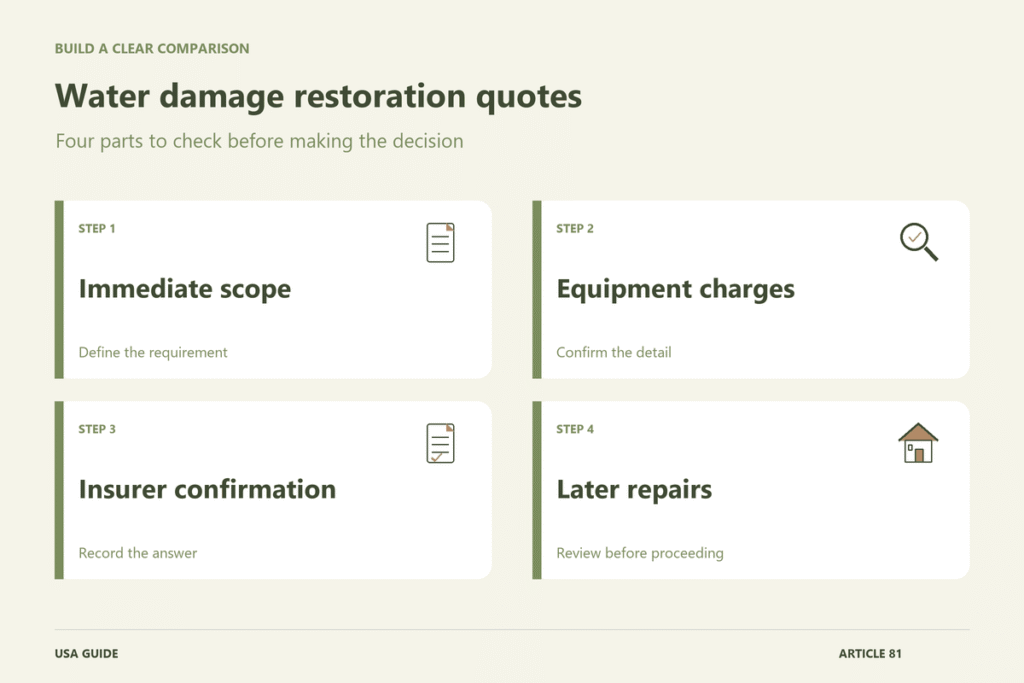
Separate initial mitigation from later repairs and request a process for approving additional work. Contact the insurer directly about coverage rather than treating the contractor’s assessment as confirmation of payment.
Establish the work that actually needs doing
Begin with the problem and the property’s circumstances rather than selecting a product from an advertisement. Ask an appropriately qualified professional to assess the site and explain the proposed work. Record the assumptions behind the quotation, including access, existing conditions and any investigation still needed. Do not attempt a hazardous inspection yourself simply to improve a buying comparison.
Request a scope you can compare
Ask for materials, labour, equipment, removal and making-good work to be identified where relevant. Find out which preparation or related tasks are excluded. Two contractors can quote different amounts because they propose different work, not because one charges more for the same service. Have each explain the reason for important differences and get any revised scope in writing before accepting a proposal.
Check delivery and responsibility
Identify the contracting business, the people carrying out the work and any specialist subcontractors. Verify relevant credentials and insurance independently. Ask about permits or other approvals where applicable and who is responsible for obtaining them. Request an explanation of the installation or work schedule, site protection and the arrangements if hidden conditions change the job. A clear variation process reduces uncertainty about additional charges.
Compare payment and aftercare
Ask which payments are due at each stage and what evidence of completion you will receive. Distinguish a product warranty from the installer’s obligations and any separately supplied maintenance service. If insurance may contribute, confirm the position with the insurer before assuming a contractor’s estimate establishes coverage. If finance is offered, assess the credit terms separately. Keep photographs, quotations, approvals and completion documents together so that the agreed work remains clear after the contractor leaves.
Build a complete cost comparison
Start with a written breakdown rather than a headline amount. Separate the initial commitment, the main charge, payments to other organisations and any optional additions. Ask which figures are fixed, which are estimates and which depend on decisions that have not been made. Put the assumptions beside the numbers. Two apparently different prices may describe different amounts of work, while two identical prices may leave you with very different obligations.
Next, ask the provider to walk through a realistic change in circumstances. What happens if the work takes longer, an additional service becomes necessary or you decide to stop? Request an explanation of how a revised price would be approved and when you would be told. Do not treat an unknown amount as zero simply because it is missing from a quotation. Mark it as unresolved until you receive a useful answer.
Compare the total commitment over the period that matters to you. An introductory saving may be outweighed by later charges; an apparently expensive proposal may include work that another proposal bills separately. The aim is to understand those differences, not to make every offer look identical. Keep the original proposal, the provider’s clarifications and the final agreement together so that you can check what changed before authorising payment or signing.
Apply the comparison to your location
Use the state relevant to your situation when checking a provider’s qualifications and the terms of an offer. A national advertisement does not establish that the advertised service is available on the same terms where you live. Record the legal name of the organisation you would contract with, the office responsible for delivery and the date of its proposal. Ask which state-specific conditions affect your comparison. Keep personal identifiers out of initial comparison emails; use a verified secure channel when supporting documents are actually needed.
Questions to put to your shortlist
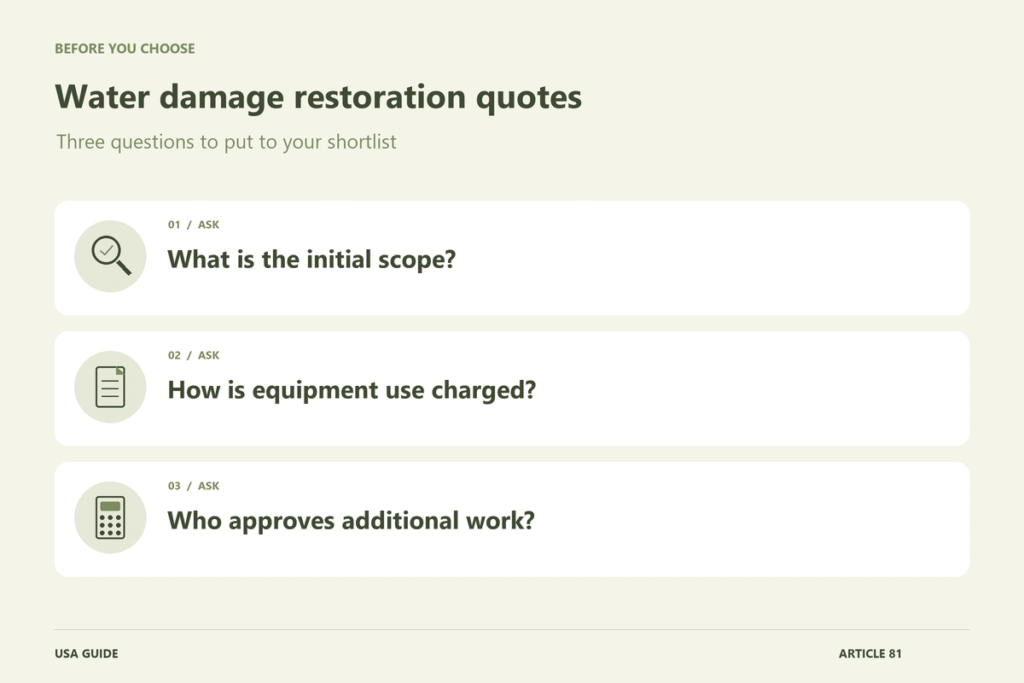
- What is the initial scope?
- How is equipment use charged?
- Who approves additional work?
A point that is easy to miss
An emergency authorisation can have a narrower purpose than a complete repair contract. Ask what you are approving and which later decisions remain open.
Put the comparison into practice
Ask the restoration contractor to identify the immediate tasks it is seeking authority to perform and the information still needed to assess later repairs. Request a clear charging basis for equipment, visits and work beyond the first authorisation. Where urgent safety issues exist, obtain appropriate professional help without attempting hazardous inspections to gather comparison information.
Contact the insurer directly about reporting and coverage, keeping the contractor’s technical estimate separate from an insurer decision. Ask how changes in scope would be documented and who approves them. If the same company offers later repair work, request a separate explanation of that stage rather than assuming it is included in an emergency mitigation instruction. Keep original photographs, reports, quotations and approvals together to preserve a clear account of the work actually authorised.
Make the final decision from the written offer
Request a proposal that reflects the circumstances you actually discussed. Check the name of the contracting organisation, the work included, the charging basis and the person responsible for answering questions. Resolve any important difference between the conversation and the documents before proceeding. Keep a dated copy of the version you accept. If an essential assumption remains uncertain, ask what evidence would settle it and how that uncertainty could affect your next step.
Further reading
Related reading
- HVAC Replacement Costs: Comparing Contractor Quotes and Financing (USA)
- Commercial Roof Replacement: Comparing Contractors, Materials and Costs (USA)
- Boiler Replacement Quotes: Comparing Installation Packages and Warranties (UK)
- Subsidence Repair Costs: Comparing Specialist Quotes and Insurance Cover (UK)
Explore more in Home Services.