Compare online MBA programmes by recognition, curriculum and the full cost of completion. Identify the career or learning objective before choosing a specialisation. Ask the institution to explain its accreditation claims and how the programme is delivered rather than relying on a ranking or salary headline.
The decision this article helps you make
Request tuition assumptions, mandatory fees and the timetable for a working student. Compare the specialisation’s actual modules with your goals and check conditions attached to any scholarship or employer support.
Define what the qualification must achieve
Identify whether you need academic study, professional eligibility, skills development or a qualification accepted by a particular employer. These goals can lead to different shortlists. Ask the relevant professional body or employer about recognition rather than relying only on a course provider’s description. An attractive programme title does not establish that it meets a licensing requirement or guarantees a particular career outcome.
Verify the institution and the programme
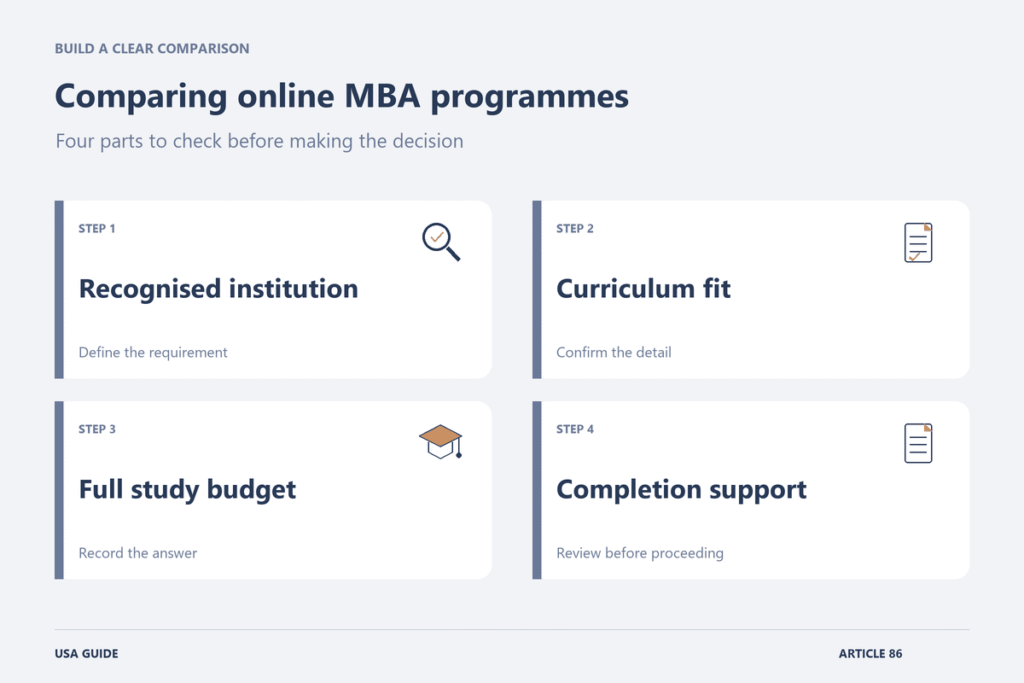
Check the awarding institution and any accreditation or professional recognition relevant to your goal. Distinguish recognition of the institution from recognition of a specific programme. Ask how location, online delivery and any practical placements affect eligibility. A provider’s marketing claim should be checked against an appropriate independent official source, especially where a regulated profession or cross-border study is involved.
Build the full study budget
Request tuition, mandatory fees, required materials, examinations and other necessary costs. Ask what happens if the course takes longer than expected or a module must be repeated. Include travel, placements and time away from paid work where relevant. Scholarships, employer contributions and finance offers should be checked against their actual conditions rather than treated as guaranteed reductions in the advertised price.
Compare delivery and completion support
Ask for a realistic timetable, the expected study load and the support available when work or family responsibilities disrupt progress. Request a demonstration of the learning environment and a clear explanation of assessment. Check deferral, withdrawal and refund arrangements before paying. A useful course comparison combines recognition, affordability and the ability to complete the work; it should not depend on a salary claim that may reflect a different group of graduates or circumstances from your own.
Compare the alternatives on the same basis
Choose the decision criteria before looking at promotional claims. Write down the outcome you need, the constraints you cannot change and the circumstances that would make an option unsuitable. Send the same basic requirements to each organisation. Otherwise, you may spend time comparing answers to different questions. A short comparison with clear assumptions is more useful than a long list of features that do not affect your decision.
Separate confirmed information from impressions. Written scope, disclosed charges and an identified delivery team belong in the first group. A persuasive conversation or an attractive website belongs in the second. Both can influence your experience, but they should not carry the same weight. Where an answer is missing, leave a visible gap rather than filling it with an optimistic assumption. Ask a follow-up question that could resolve the uncertainty.
Finally, test your preferred option against a plausible difficulty: a delay, a change in scope, an unavailable contact or an unexpected additional cost. Ask how the agreement would handle that situation. This can reveal important differences that a simple price ranking hides. Choose the option whose commitments and limitations you understand, and record why it fits your needs. If the essential information is still missing, improve the comparison before treating the shortlist as a final decision.
Apply the comparison to your location
Use the state relevant to your situation when checking a provider’s qualifications and the terms of an offer. A national advertisement does not establish that the advertised service is available on the same terms where you live. Record the legal name of the organisation you would contract with, the office responsible for delivery and the date of its proposal. Ask which state-specific conditions affect your comparison. Keep personal identifiers out of initial comparison emails; use a verified secure channel when supporting documents are actually needed.
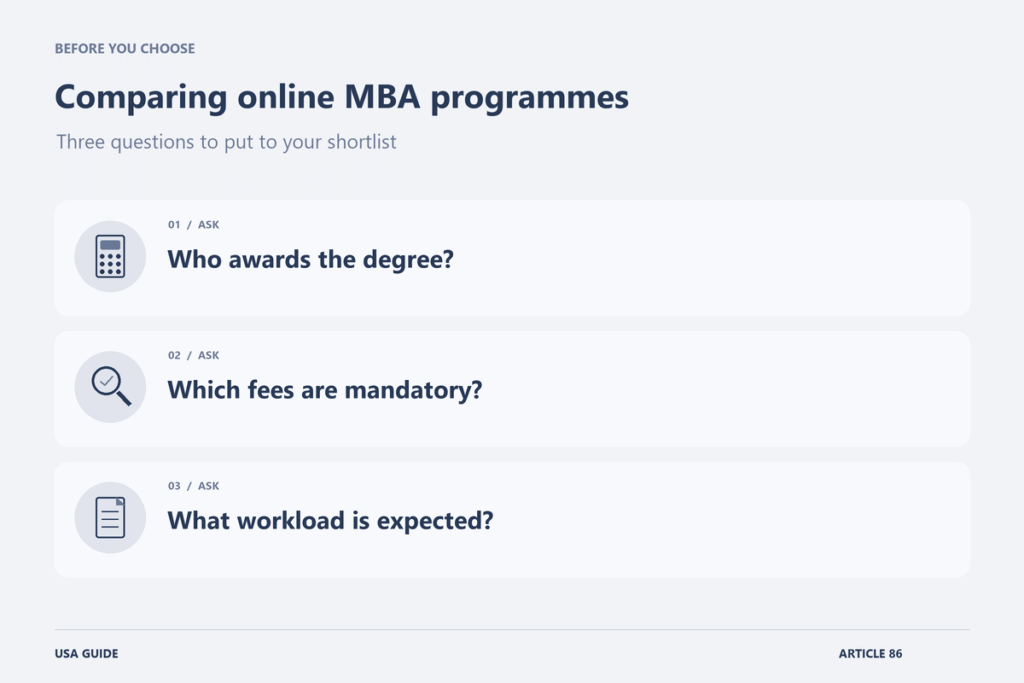
Questions to put to your shortlist
- Who awards the degree?
- Which fees are mandatory?
- What workload is expected?
A point that is easy to miss
Institutional recognition and a programme’s particular accreditation claims are separate questions. Verify the relevant details before using the word accredited as a complete quality assessment.
Put the comparison into practice
Ask the institution to distinguish its own recognition from any programme-specific accreditation claims and verify the relevant details independently. Then compare the curriculum, assessments and actual specialisation modules with your goals. A recognised institution can offer several programmes with different structures, so a broad brand reputation is not a full course comparison.
Build a complete budget using the expected study pattern. Include mandatory fees, materials and any required travel, and ask how costs change if completion takes longer or a module is repeated. Check scholarship and employer-support conditions before treating them as guaranteed savings. Request a realistic timetable and access to information about student support. The useful question is whether you can complete a suitable programme at an understood cost, not whether a general salary headline makes the tuition look recoverable.
Further reading
Related reading
- Online Nursing Degree Programs: Comparing Accreditation and Total Costs (USA)
- Online Master's in Cybersecurity: Comparing Tuition and Program Features (USA)
- Online MBA Courses: Comparing Accreditation, Tuition and Study Options (UK)
- Cybersecurity Certification Training Providers: Comparing Course and Exam Packages (UK)
Explore more in Education.