
Compare cybersecurity training packages by the certification they prepare you for and the services actually included. Training attendance, an exam voucher and certification are different things. Ask the provider to explain assessment, prerequisites and the organisation responsible for awarding the credential.
The decision this article helps you make
Check the exam and certification details with the awarding body. Compare tutor access, laboratory time, resit conditions and voucher expiry before accepting a package described as an all-inclusive route to certification.
Define what the qualification must achieve
Identify whether you need academic study, professional eligibility, skills development or a qualification accepted by a particular employer. These goals can lead to different shortlists. Ask the relevant professional body or employer about recognition rather than relying only on a course provider’s description. An attractive programme title does not establish that it meets a licensing requirement or guarantees a particular career outcome.
Verify the institution and the programme
Check the awarding institution and any accreditation or professional recognition relevant to your goal. Distinguish recognition of the institution from recognition of a specific programme. Ask how location, online delivery and any practical placements affect eligibility. A provider’s marketing claim should be checked against an appropriate independent official source, especially where a regulated profession or cross-border study is involved.
Build the full study budget
Request tuition, mandatory fees, required materials, examinations and other necessary costs. Ask what happens if the course takes longer than expected or a module must be repeated. Include travel, placements and time away from paid work where relevant. Scholarships, employer contributions and finance offers should be checked against their actual conditions rather than treated as guaranteed reductions in the advertised price.
Compare delivery and completion support
Ask for a realistic timetable, the expected study load and the support available when work or family responsibilities disrupt progress. Request a demonstration of the learning environment and a clear explanation of assessment. Check deferral, withdrawal and refund arrangements before paying. A useful course comparison combines recognition, affordability and the ability to complete the work; it should not depend on a salary claim that may reflect a different group of graduates or circumstances from your own.
Examine what the package actually includes
Translate every broad description into an observable deliverable. Words such as comprehensive, premium and fully managed are not a substitute for an explanation of what the organisation will do. Ask for the tasks, the responsible people, the expected output and any conditions that limit delivery. The objective is to make the offer specific enough that you can recognise both completion and an omission.
Look carefully at the boundary between the main provider and third parties. A package may depend on another professional, a separate supplier or a product with its own terms. Ask who selects that third party, who receives the invoice and who responds if something goes wrong. Identify which commitments belong in your main agreement and which require separate confirmation. Do not assume that a referral automatically includes responsibility for the referred service.
Then check how changes are handled. Ask whether additional work needs your approval, how its price would be disclosed and what happens if you decline. A package can still be useful when it has exclusions, provided those exclusions are understandable and compatible with your needs. Compare the proposed scope against your own requirements rather than rewarding the longest feature list. Pay particular attention to the part of the service you would find hardest to replace yourself.
Apply the comparison to your location
UK-wide marketing can conceal differences between the services available in England, Wales, Scotland and Northern Ireland. Identify the nation relevant to your circumstances and ask the provider to explain any local limitations. Where regulation applies, check the appropriate register and the firm’s contact details independently. Registration is a starting check, not a promise of a particular outcome. Ask whether the quoted amount includes VAT where applicable, which organisation would take your payment and which complaints process applies to that specific service.
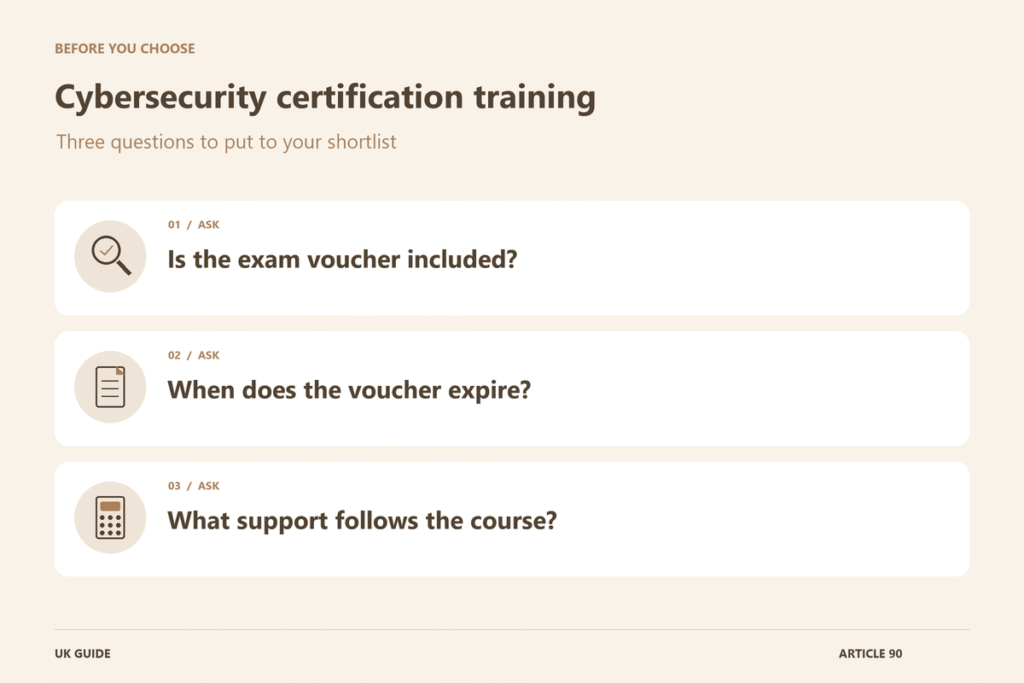
Questions to put to your shortlist
- Is the exam voucher included?
- When does the voucher expire?
- What support follows the course?
A point that is easy to miss
Completing a training course does not necessarily mean the credential has been awarded. Verify the awarding body’s requirements and distinguish preparation from examination and certification.
Put the comparison into practice
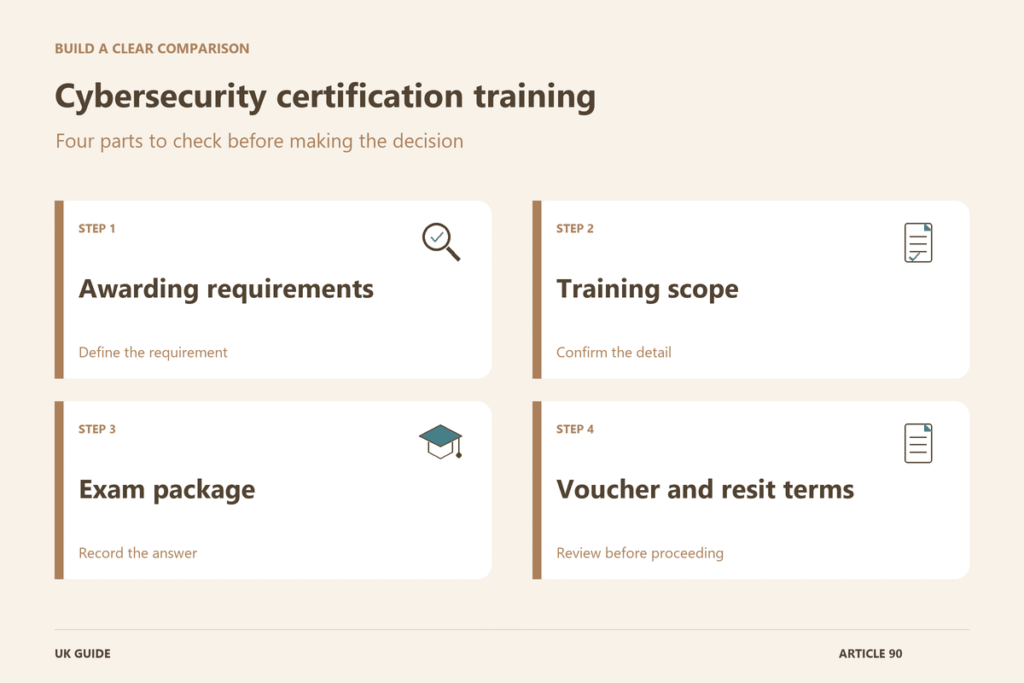
Check the awarding body’s current requirements and identify what the training provider actually supplies. A course may prepare you for an exam without including a voucher, meeting prerequisites or conferring the certification itself. Ask for those boundaries in writing so that different packages can be compared on the same basis.
Examine laboratory access, tutor availability, voucher expiry and the conditions for any resit offer. Ask what happens if you cannot attend or are not ready to sit the exam when the course ends. Include required books, software or separate exam charges in the total budget. The most useful comparison connects training to a defined learning goal and an understood assessment route, without treating a completion certificate or a promotional job claim as equivalent to the professional credential you intend to pursue.
Make the final decision from the written offer
Request a proposal that reflects the circumstances you actually discussed. Check the name of the contracting organisation, the work included, the charging basis and the person responsible for answering questions. Resolve any important difference between the conversation and the documents before proceeding. Keep a dated copy of the version you accept. If an essential assumption remains uncertain, ask what evidence would settle it and how that uncertainty could affect your next step.
Further reading
Related reading
- Online MBA Courses: Comparing Accreditation, Tuition and Study Options (UK)
- Online Master's in Cybersecurity: Comparing Tuition and Program Features (USA)
- Online Nursing Degree Programs: Comparing Accreditation and Total Costs (USA)
- Accredited Online MBA Programs: Comparing Tuition, Fees and Specializations (USA)
Explore more in Education.