Before accepting a no win no fee proposal for a fatal injury claim, ask for a complete explanation of the funding and possible costs. Clarify who would sign the agreement and authorise spending. A short slogan does not explain the obligations of the person instructing the firm.
The decision this article helps you make
Compare the proposed deductions, outside costs and arrangements if the matter stops or does not succeed. Request an explanation connected to the relevant jurisdiction and actual engagement.
Begin with the practical authority to act
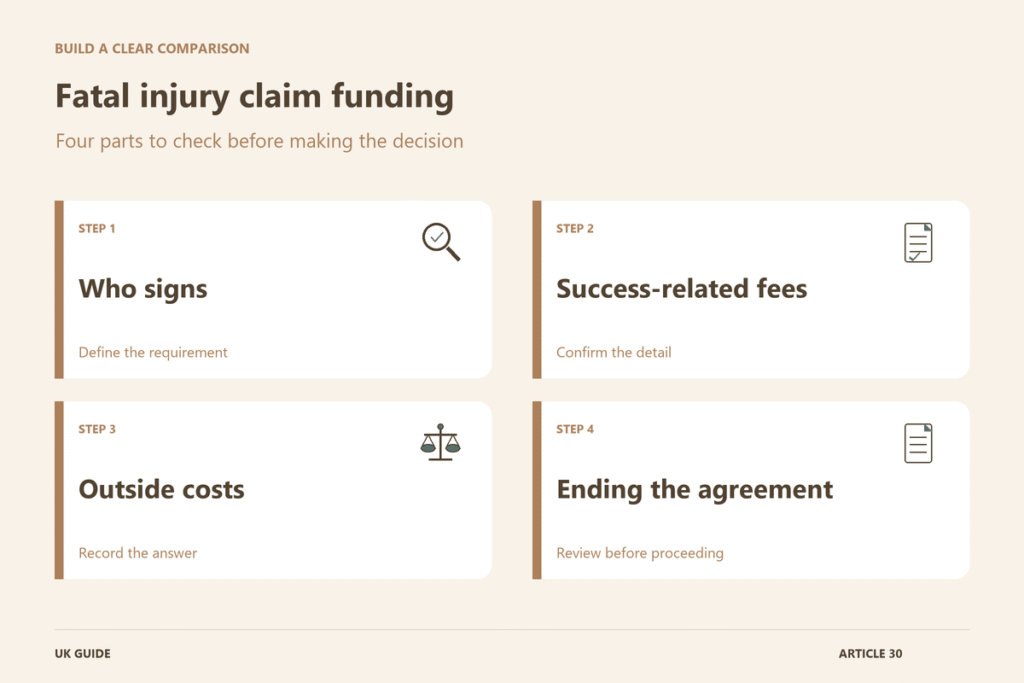
Before discussing a claim in detail, ask a lawyer to explain who may instruct the firm and what documents are needed to establish that person’s authority. Family relationships, estate arrangements and the relevant legal system may affect the assessment. Do not assume that the person organising an initial enquiry is automatically the person who should sign the engagement or make decisions for everyone involved.
Compare the factual investigation
Give the team a chronology and identify existing incident records, correspondence and people who may hold relevant information. Ask what further material the firm would need to assess the circumstances of the death and possible legal routes. Keep unresolved questions visible. An investigation can be important even where a family has already received an explanation from an insurer, employer or another organisation.
Make communication responsibilities explicit
Ask how updates would be delivered and which authorised family contacts could receive them. A firm should explain how it would manage conflicting instructions or questions about who can make a decision. This is a practical service issue, not a matter solved by an empathetic advertisement. Compare the proposed communication arrangements with the needs of the people involved, including accessibility and scheduling.
Understand the scope and possible deductions
Request a written description of the work the firm would undertake and any estate, probate or related work outside that engagement. Ask how fees, outside expenses and potential recoveries would be explained before a decision is required. Avoid using another family’s reported settlement as an estimate. Individual advice is needed about eligibility, deadlines and financial consequences; a provider comparison should help you identify the team that can give that explanation clearly.
Build a complete cost comparison
Start with a written breakdown rather than a headline amount. Separate the initial commitment, the main charge, payments to other organisations and any optional additions. Ask which figures are fixed, which are estimates and which depend on decisions that have not been made. Put the assumptions beside the numbers. Two apparently different prices may describe different amounts of work, while two identical prices may leave you with very different obligations.
Next, ask the provider to walk through a realistic change in circumstances. What happens if the work takes longer, an additional service becomes necessary or you decide to stop? Request an explanation of how a revised price would be approved and when you would be told. Do not treat an unknown amount as zero simply because it is missing from a quotation. Mark it as unresolved until you receive a useful answer.
Compare the total commitment over the period that matters to you. An introductory saving may be outweighed by later charges; an apparently expensive proposal may include work that another proposal bills separately. The aim is to understand those differences, not to make every offer look identical. Keep the original proposal, the provider’s clarifications and the final agreement together so that you can check what changed before authorising payment or signing.
Apply the comparison to your location
UK-wide marketing can conceal differences between the services available in England, Wales, Scotland and Northern Ireland. Identify the nation relevant to your circumstances and ask the provider to explain any local limitations. Where regulation applies, check the appropriate register and the firm’s contact details independently. Registration is a starting check, not a promise of a particular outcome. Ask whether the quoted amount includes VAT where applicable, which organisation would take your payment and which complaints process applies to that specific service.
Questions to put to your shortlist
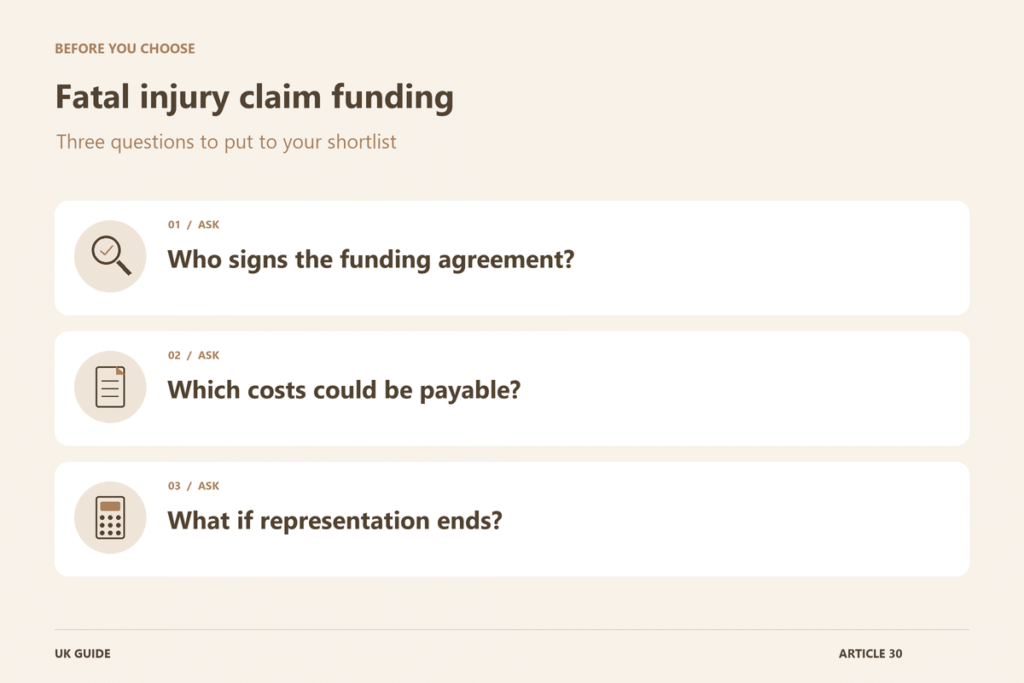
- Who signs the funding agreement?
- Which costs could be payable?
- What if representation ends?
A point that is easy to miss
Funding terms should be understood by the person who accepts them. Ask for written clarification of uncertain obligations before relying on an initial telephone explanation.
Put the comparison into practice
Request a written explanation covering a successful claim, an unsuccessful conclusion and a decision to end the engagement. For each situation, ask which professional charges, outside expenses or other obligations could apply under the proposed arrangement. Establish who would accept the terms and authorise any additional spending.
If insurance or another funding element is proposed, ask for its separate documents and an explanation of how it interacts with the solicitor’s agreement. Do not assume that one phrase describes every part of the financial arrangement. Compare the scope alongside the costs, including any estate or related work that falls outside it. A complete proposal gives the person instructing the firm an understandable picture of the commitment without requiring the family to rely on an optimistic example of recovery.
Make the final decision from the written offer
Request a proposal that reflects the circumstances you actually discussed. Check the name of the contracting organisation, the work included, the charging basis and the person responsible for answering questions. Resolve any important difference between the conversation and the documents before proceeding. Keep a dated copy of the version you accept. If an essential assumption remains uncertain, ask what evidence would settle it and how that uncertainty could affect your next step.
Further reading
Related reading
- Fatal Accident Claims: How to Choose a Solicitor (UK)
- Fatal Truck Accident Claims: What to Ask a Wrongful Death Law Firm (USA)
- Wrongful Death Lawyer Fees: Comparing Contingency Agreements (USA)
- How to Choose a Wrongful Death Attorney (USA)
Explore more in Wrongful Death and Fatal Accident Claims.