A contingency agreement should be understandable before you accept it. Ask how the attorney’s fee is calculated, what expenses are separate and which events could change your obligations. Read the scope and cost terms together so that the work you expect is actually covered.
The decision this article helps you make
Walk through the document with the attorney and mark unclear provisions. Ask for examples of how deductions would be calculated under different hypothetical outcomes without treating those examples as recovery estimates.
Make the charging arrangement understandable
Ask a legal provider to explain the difference between payment for professional work and amounts paid to other organisations. Then ask how the proposed agreement handles each. Advertising often compresses the arrangement into a short phrase; your decision needs the underlying terms. Have the provider identify which documents govern the relationship and resolve any inconsistency between the sales explanation and the written engagement.
Test more than one possible outcome
Ask for an explanation of what would happen if the matter resolves early, requires more work, ends unsuccessfully or is stopped by you. Use hypothetical examples with labelled assumptions. The aim is to understand the charging mechanism rather than obtain a prediction of a legal result. Ask whether a change in the work or strategy would require your approval and how a revised cost estimate would be communicated.
Check the scope alongside the price
Confirm which tasks the provider will undertake, who will perform them and which related disputes need separate representation. A price comparison is misleading if one engagement includes work another excludes. Ask who decides whether outside expertise is necessary, who approves the expenditure and what documentation you would receive. Keep funding questions connected to the actual services being proposed.
Preserve a clear record of the decision
Keep the engagement letter, funding documents, cost explanations and later revisions together. If the agreement remains unclear, request a written explanation before signing rather than relying on what you remember from a conversation. Ask where to raise a billing question and how a concern about service would be handled. Independent legal advice may be useful where the financial or procedural implications are difficult to understand; a general comparison cannot interpret an individual contract for you.
Organise the next steps before you start
Build a short timeline containing the decisions, documents and approvals involved. Distinguish tasks you control from tasks that depend on a professional assessment or an external organisation. Ask the provider to identify the next actionable step and explain what information would change its recommendation. A realistic sequence makes it easier to spot a missing dependency before it creates a delay or an avoidable expense.
Keep a working record of questions, answers and documents supplied. Note the date, the person who responded and any action you agreed to take. If someone gives an important explanation by telephone, request a written confirmation. This record is useful because an initial conversation is rarely the final agreement. Circumstances can change, and you need to know whether a later instruction replaces an earlier one or simply adds another requirement.
Before moving to the next stage, check what you are authorising and what remains undecided. Sending an enquiry, attending an assessment, accepting a proposal and signing a contract can be different steps with different consequences. Ask for the distinction in plain language. Set a reminder for the next update, but ask a qualified professional promptly about any actual deadline rather than assuming that an informal comparison process protects your position.
Apply the comparison to your location
Use the state relevant to your situation when checking a provider’s qualifications and the terms of an offer. A national advertisement does not establish that the advertised service is available on the same terms where you live. Record the legal name of the organisation you would contract with, the office responsible for delivery and the date of its proposal. Ask which state-specific conditions affect your comparison. Keep personal identifiers out of initial comparison emails; use a verified secure channel when supporting documents are actually needed.
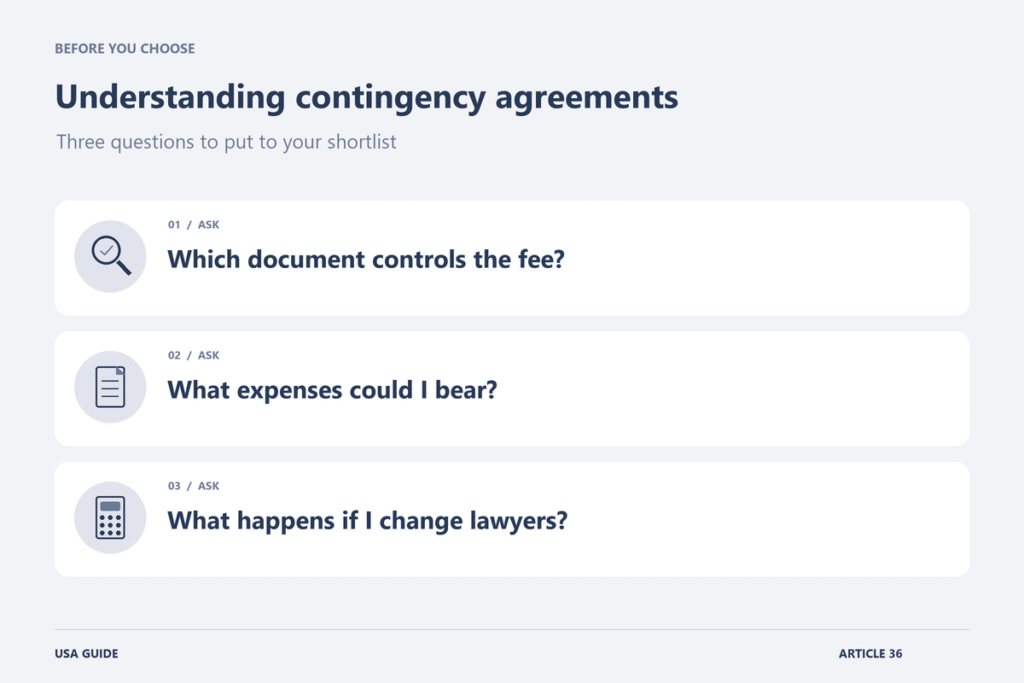
Questions to put to your shortlist
- Which document controls the fee?
- What expenses could I bear?
- What happens if I change lawyers?
A point that is easy to miss
A verbal assurance should not leave an important written term unexplained. Ask the attorney to resolve the difference before deciding whether to sign.
Put the comparison into practice
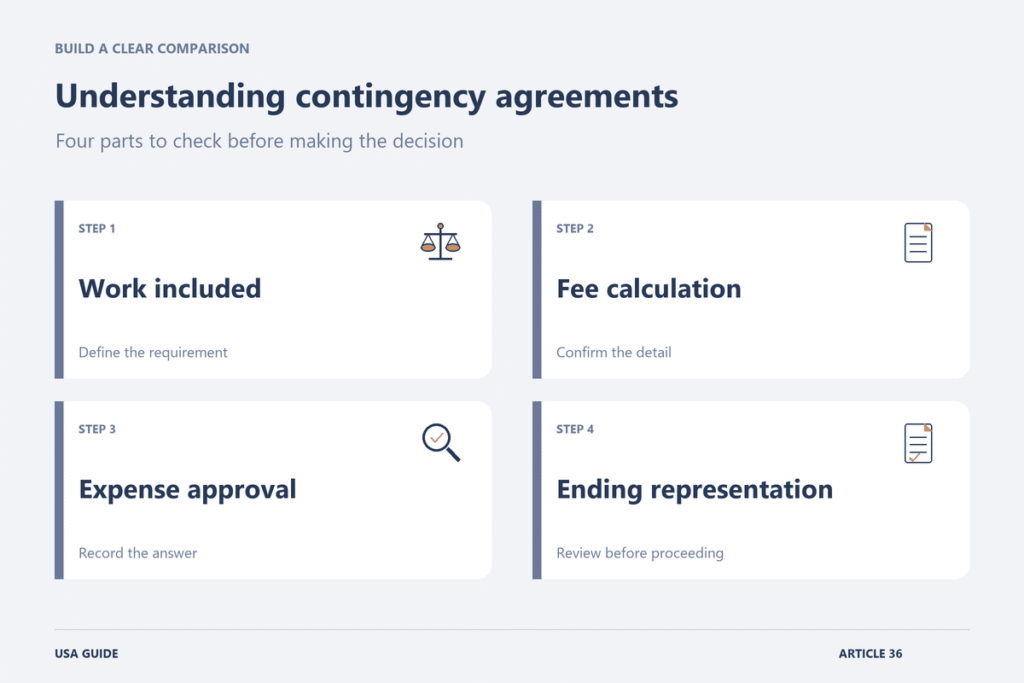
Read the engagement as a sequence of decisions. Identify when the relationship starts, what the attorney agrees to do, how fees and expenses are calculated and what happens if either side wishes to stop. Ask the attorney to point to the provision governing each important explanation rather than leaving a key assurance outside the written agreement.
Use a clearly hypothetical fee calculation to check your understanding. Ask what changes when expenses increase or the matter reaches a different stage. Then confirm who approves spending and how the final accounting would be explained. If you do not understand the practical effect of a term, request clarification or appropriate independent advice before accepting it. The aim is an informed agreement, not simply a signature obtained after a reassuring introductory conversation.
Make the final decision from the written offer
Request a proposal that reflects the circumstances you actually discussed. Check the name of the contracting organisation, the work included, the charging basis and the person responsible for answering questions. Resolve any important difference between the conversation and the documents before proceeding. Keep a dated copy of the version you accept. If an essential assumption remains uncertain, ask what evidence would settle it and how that uncertainty could affect your next step.
Further reading
Related reading
- Attorney Fees vs Case Expenses: Comparing the Total Cost of a Claim (USA)
- Hiring a Lawyer for an Insurance Settlement Dispute: Fees and Services (USA)
- Solicitor Success Fees: What to Check in a No Win No Fee Agreement (UK)
- Legal Expenses Insurance vs No Win No Fee Funding: What to Compare (UK)
Explore more in Lawyer Fees and Claim Process.