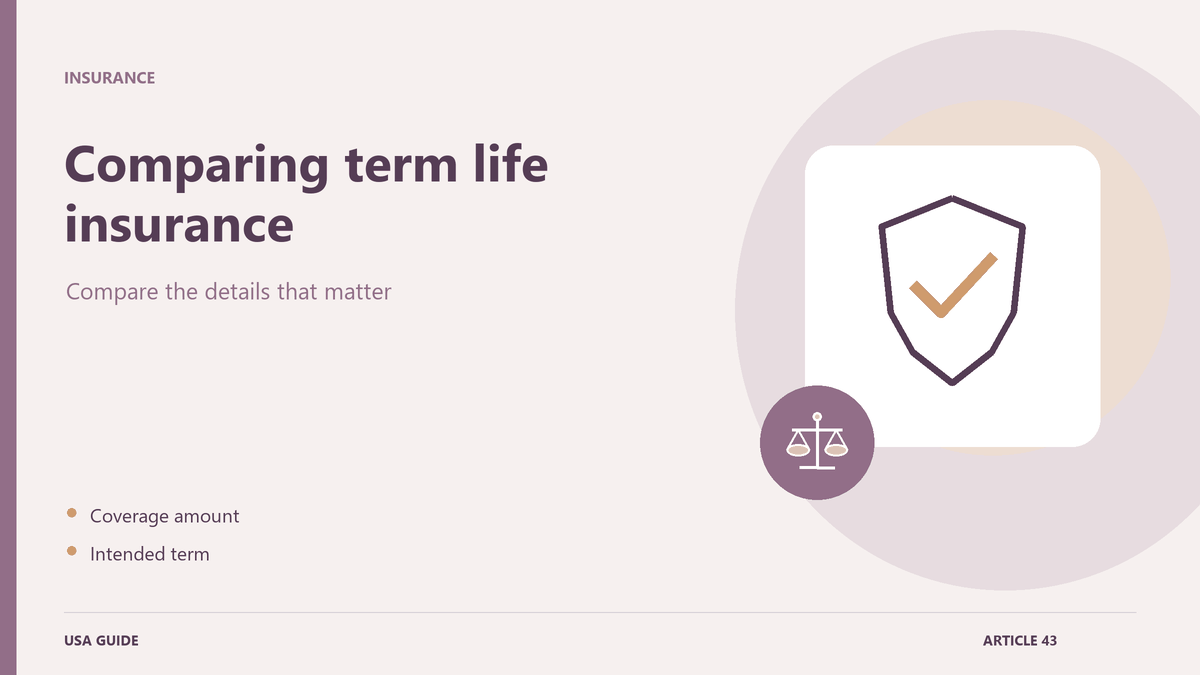
Compare term life insurance quotes using the same coverage amount, intended term and accurate applicant information. Ask which parts of the initial quote remain subject to assessment. An attractive starting premium does not by itself establish the final offer or the policy’s suitability for your circumstances.
The decision this article helps you make
Review the premium structure, exclusions and conditions with the insurer or a suitably qualified adviser. Ask what would happen if your needs change before the proposed term ends.
Define the risk before comparing premiums
Write down what you need the policy to protect and the financial loss you are trying to manage. Identify the people, activities, property or circumstances that matter to the application. Use the same accurate information for each quote and ask an insurer or broker about any detail you are uncertain how to describe. A low premium is not a useful saving if the proposal is based on a different risk from yours.
Read the coverage alongside the exclusions
Compare the policy wording, limits, deductible or excess, and conditions affecting a claim. Ask which events are outside the proposed cover and which optional additions would change the premium. Have the provider explain a realistic example that matters to you, including the part you would need to fund yourself. Do not infer that two policies are equivalent because they share a familiar product name.
Establish who supplies and services the policy
Identify the insurer, the broker if there is one, and the organisation responsible for handling a claim. Ask about the broker’s role and any separate fees. Check the relevant licensing or regulatory information independently. Where an existing policy is involved, ask how a change would be coordinated and which dates, conditions or disclosures need attention before you rely on replacement cover.
Compare the ongoing arrangement
Ask how renewal, cancellation, changes to the insured circumstances and claim reporting would work. Request a written explanation of any condition you would find difficult to meet. Store the application information and policy documents together so that the coverage can be checked later. A useful final choice balances the premium with the cover you understand, the amount you could afford to pay yourself and the responsibilities you would take on under the contract.
Compare the alternatives on the same basis
Choose the decision criteria before looking at promotional claims. Write down the outcome you need, the constraints you cannot change and the circumstances that would make an option unsuitable. Send the same basic requirements to each organisation. Otherwise, you may spend time comparing answers to different questions. A short comparison with clear assumptions is more useful than a long list of features that do not affect your decision.
Separate confirmed information from impressions. Written scope, disclosed charges and an identified delivery team belong in the first group. A persuasive conversation or an attractive website belongs in the second. Both can influence your experience, but they should not carry the same weight. Where an answer is missing, leave a visible gap rather than filling it with an optimistic assumption. Ask a follow-up question that could resolve the uncertainty.
Finally, test your preferred option against a plausible difficulty: a delay, a change in scope, an unavailable contact or an unexpected additional cost. Ask how the agreement would handle that situation. This can reveal important differences that a simple price ranking hides. Choose the option whose commitments and limitations you understand, and record why it fits your needs. If the essential information is still missing, improve the comparison before treating the shortlist as a final decision.
Apply the comparison to your location
Use the state relevant to your situation when checking a provider’s qualifications and the terms of an offer. A national advertisement does not establish that the advertised service is available on the same terms where you live. Record the legal name of the organisation you would contract with, the office responsible for delivery and the date of its proposal. Ask which state-specific conditions affect your comparison. Keep personal identifiers out of initial comparison emails; use a verified secure channel when supporting documents are actually needed.
Questions to put to your shortlist
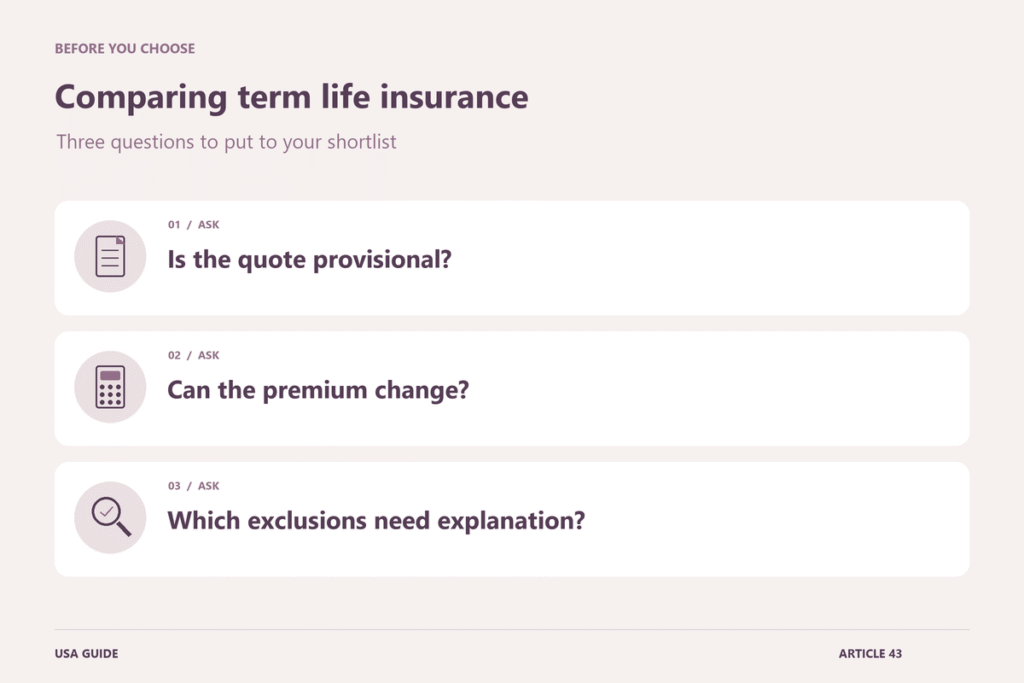
- Is the quote provisional?
- Can the premium change?
- Which exclusions need explanation?
A point that is easy to miss
Avoid cancelling existing cover on the strength of an initial quote alone. Ask the providers how any replacement would be coordinated and when the new policy would actually take effect.
Put the comparison into practice
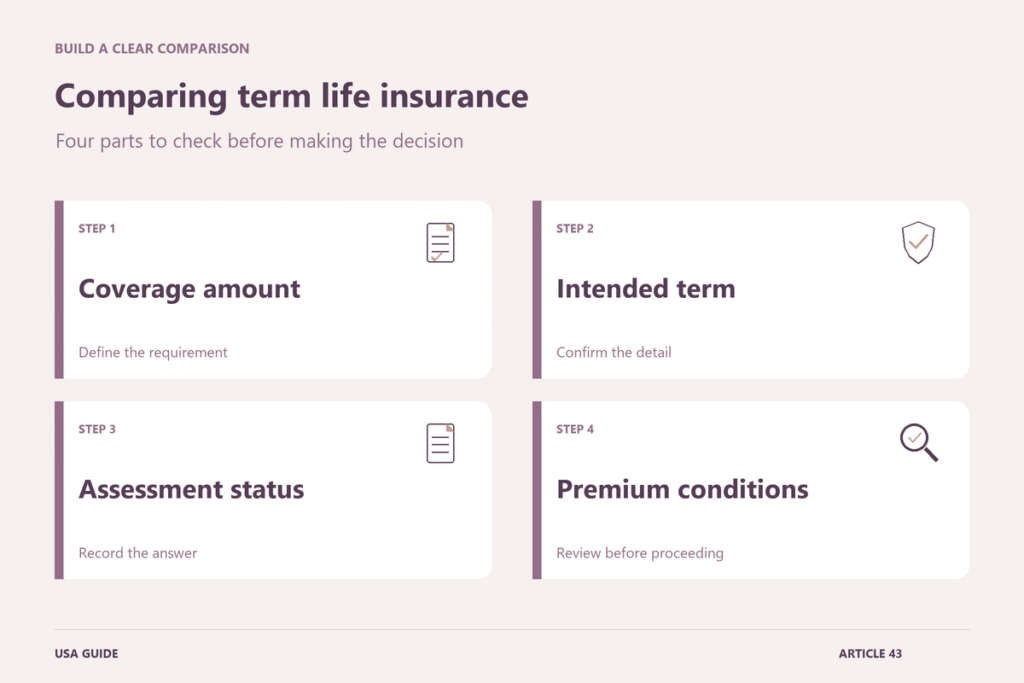
Use the same coverage amount and proposed term when requesting comparisons, then ask each insurer which information still needs assessment. Record whether the premium is an initial indication or a final offer and what conditions apply. This prevents a provisional low quote from being compared as though it were equivalent to an assessed proposal.
Review how the coverage period relates to the financial need you are considering, with qualified advice where appropriate. Ask what the premium terms are, when cover begins and what options exist if needs change. Avoid assuming that an application, payment instruction or successful initial enquiry means replacement cover is already in force. If an existing policy is involved, obtain a clear explanation of timing and conditions before taking any step that could leave a gap.
Further reading
Related reading
- Professional Liability Insurance for Consultants: Comparing Policy Quotes (USA)
- Commercial Truck Insurance Quotes: Comparing Coverage, Deductibles and Costs (USA)
- Public Liability Insurance for Builders: Comparing Quotes and Exclusions (UK)
- Private Health Insurance: Comparing Premiums, Excesses and Hospital Networks (UK)
Explore more in Insurance.