Compare car accident solicitors using the investigation they propose, the funding terms they offer and the person who would handle your claim. Start with the relevant UK jurisdiction. A short list of clear written proposals is more informative than a long list of advertising promises.
The decision this article helps you make
Ask each solicitor to work from the same incident summary. Record how they explain unanswered questions, possible costs and the communication you should expect after instructing them.
Prepare a usable collision summary
List the incident date, location, vehicles involved and documents already available. Keep photographs, messages and insurer correspondence in their original form. Distinguish a fact you observed from an interpretation of why the collision happened. This gives a prospective legal team a more reliable starting point than a polished account that hides uncertainty or leaves out a difficult detail.
Ask how the claim would be assessed
A lawyer should explain which parts of the account need further investigation and which supporting information may matter. Ask about injury records, vehicle evidence and the practical impact on your work or daily activities without assuming any particular claim outcome. If more than one insurer or organisation is involved, ask how the team would clarify their roles before recommending a route forward.
Understand representation and charging boundaries
Confirm which issues the proposed engagement covers. An injury claim, a vehicle damage dispute and other financial consequences may not all be handled in the same way. Ask what the firm would do directly, what it would refer elsewhere and how any separate work would be charged. Have the team identify when your approval would be needed for additional spending or a change in scope.
Judge the service you would actually receive
Ask who answers routine questions, who gives legal advice and how often meaningful updates would arrive. Consider practical accessibility if treatment, work or transport make meetings difficult. Save the firm’s written explanation alongside the engagement documents so that you can identify later changes. A good comparison helps you understand the evidence plan, communication and possible costs without relying on a promise that all accident claims follow an identical timetable.
Compare the alternatives on the same basis
Choose the decision criteria before looking at promotional claims. Write down the outcome you need, the constraints you cannot change and the circumstances that would make an option unsuitable. Send the same basic requirements to each organisation. Otherwise, you may spend time comparing answers to different questions. A short comparison with clear assumptions is more useful than a long list of features that do not affect your decision.
Separate confirmed information from impressions. Written scope, disclosed charges and an identified delivery team belong in the first group. A persuasive conversation or an attractive website belongs in the second. Both can influence your experience, but they should not carry the same weight. Where an answer is missing, leave a visible gap rather than filling it with an optimistic assumption. Ask a follow-up question that could resolve the uncertainty.
Finally, test your preferred option against a plausible difficulty: a delay, a change in scope, an unavailable contact or an unexpected additional cost. Ask how the agreement would handle that situation. This can reveal important differences that a simple price ranking hides. Choose the option whose commitments and limitations you understand, and record why it fits your needs. If the essential information is still missing, improve the comparison before treating the shortlist as a final decision.
Apply the comparison to your location
UK-wide marketing can conceal differences between the services available in England, Wales, Scotland and Northern Ireland. Identify the nation relevant to your circumstances and ask the provider to explain any local limitations. Where regulation applies, check the appropriate register and the firm’s contact details independently. Registration is a starting check, not a promise of a particular outcome. Ask whether the quoted amount includes VAT where applicable, which organisation would take your payment and which complaints process applies to that specific service.
Questions to put to your shortlist
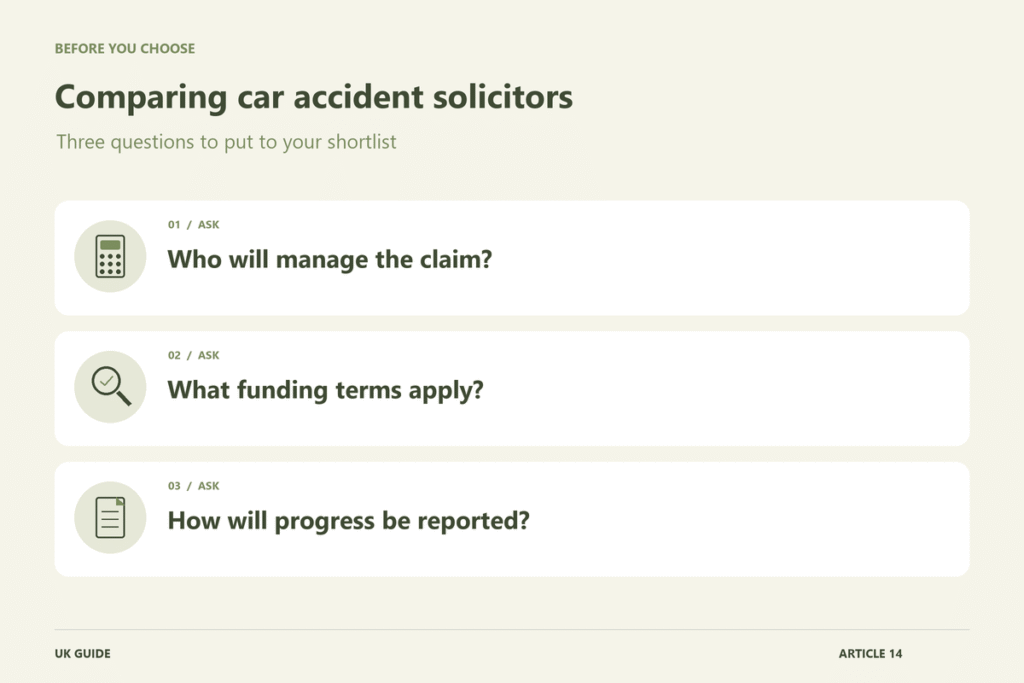
- Who will manage the claim?
- What funding terms apply?
- How will progress be reported?
A point that is easy to miss
A positive initial conversation should be reflected in the client-care and funding documents. Resolve differences between the explanation and the paperwork before relying on either.
Put the comparison into practice
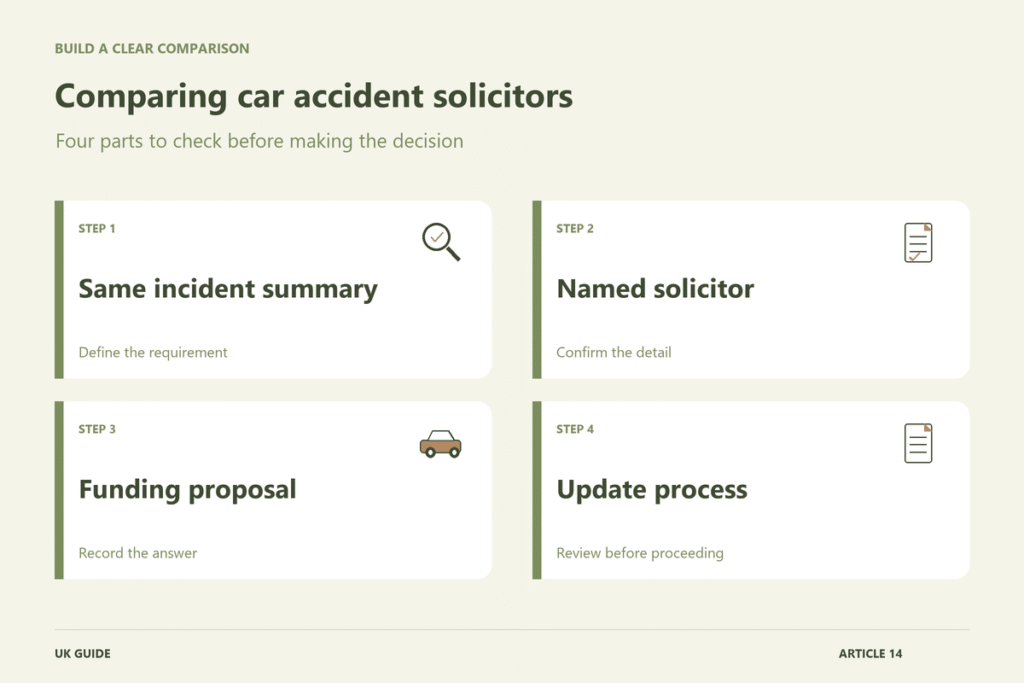
Use one page to compare the named case handler, supervising solicitor, funding terms and proposed investigation. Ask each firm the same practical question: what would you need from me after instruction, and what would you investigate yourself? Record specific answers rather than awarding points for broad claims about experience or service.
Check how a routine enquiry becomes a substantive legal discussion. For example, ask who would explain an insurer’s offer and what information the solicitor would need before giving advice about it. Confirm the expected update process and how a concern about delay would be raised. If the firm proposes to refer any part of the work elsewhere, ask who would take responsibility for the handover and whether that creates separate terms or costs.
Make the final decision from the written offer
Request a proposal that reflects the circumstances you actually discussed. Check the name of the contracting organisation, the work included, the charging basis and the person responsible for answering questions. Resolve any important difference between the conversation and the documents before proceeding. Keep a dated copy of the version you accept. If an essential assumption remains uncertain, ask what evidence would settle it and how that uncertainty could affect your next step.
Further reading
Related reading
- Motorcycle Accident Compensation: Choosing a Specialist Solicitor (UK)
- Rideshare Accident Lawyers: What to Ask Before Hiring an Uber or Lyft Attorney (USA)
- How to Choose a Motorcycle Accident Attorney for a Serious Injury Claim (USA)
- Car Accident Lawyer Fees: Comparing Contingency Costs and Case Expenses (USA)
Explore more in Car and Motorcycle Accidents.