Selecting a solicitor for a motorcycle injury claim should involve more than an advertised compensation figure. Ask about the proposed investigation, the solicitor’s relevant experience and the support available during treatment. Confirm which UK legal system and funding terms apply to your circumstances.
The decision this article helps you make
Compare how candidates would gather evidence and explain the practical impact of injuries. A useful assessment identifies unknowns instead of presenting another person’s settlement as a guide to yours.
Prepare a usable collision summary
List the incident date, location, vehicles involved and documents already available. Keep photographs, messages and insurer correspondence in their original form. Distinguish a fact you observed from an interpretation of why the collision happened. This gives a prospective legal team a more reliable starting point than a polished account that hides uncertainty or leaves out a difficult detail.
Ask how the claim would be assessed
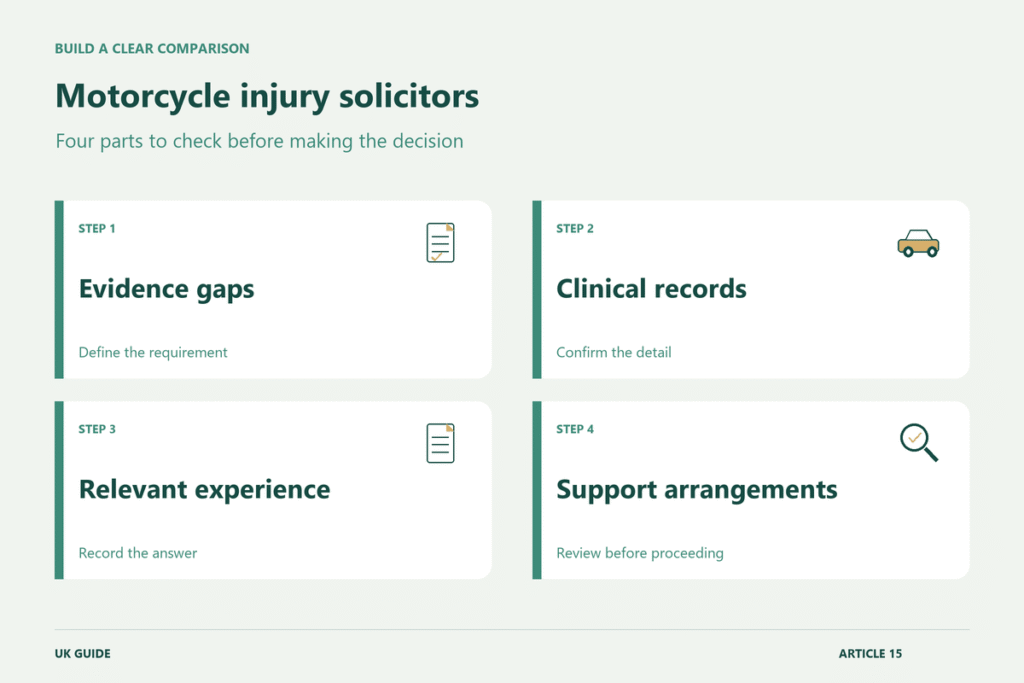
A lawyer should explain which parts of the account need further investigation and which supporting information may matter. Ask about injury records, vehicle evidence and the practical impact on your work or daily activities without assuming any particular claim outcome. If more than one insurer or organisation is involved, ask how the team would clarify their roles before recommending a route forward.
Understand representation and charging boundaries
Confirm which issues the proposed engagement covers. An injury claim, a vehicle damage dispute and other financial consequences may not all be handled in the same way. Ask what the firm would do directly, what it would refer elsewhere and how any separate work would be charged. Have the team identify when your approval would be needed for additional spending or a change in scope.
Judge the service you would actually receive
Ask who answers routine questions, who gives legal advice and how often meaningful updates would arrive. Consider practical accessibility if treatment, work or transport make meetings difficult. Save the firm’s written explanation alongside the engagement documents so that you can identify later changes. A good comparison helps you understand the evidence plan, communication and possible costs without relying on a promise that all accident claims follow an identical timetable.
Test the provider before making the commitment
Turn the first conversation into a practical assessment. Describe your circumstances briefly, then ask the provider to explain its proposed approach, the information still missing and the next decision you would face. A useful explanation separates what can be confirmed now from what needs investigation. Record those answers immediately so that confident presentation does not become a substitute for substance when you compare candidates later.
Ask who would actually do the work. The person who handles an initial enquiry may have a different role from the person responsible for delivery. Find out how you would reach the responsible professional, what happens during an absence and when progress updates would arrive. Request examples of the documents or reports you would receive, with identifying information removed. This tests the service you would experience rather than the quality of the sales pitch.
Then examine the conditions for leaving. Ask how records, work already completed, outstanding charges and any ongoing responsibilities would be handled if the relationship ended. The answer matters even when you expect to stay. A provider that can explain its boundaries, handover arrangements and unresolved issues gives you a more usable basis for selection than one that simply promises an effortless outcome.
Apply the comparison to your location
UK-wide marketing can conceal differences between the services available in England, Wales, Scotland and Northern Ireland. Identify the nation relevant to your circumstances and ask the provider to explain any local limitations. Where regulation applies, check the appropriate register and the firm’s contact details independently. Registration is a starting check, not a promise of a particular outcome. Ask whether the quoted amount includes VAT where applicable, which organisation would take your payment and which complaints process applies to that specific service.
Questions to put to your shortlist
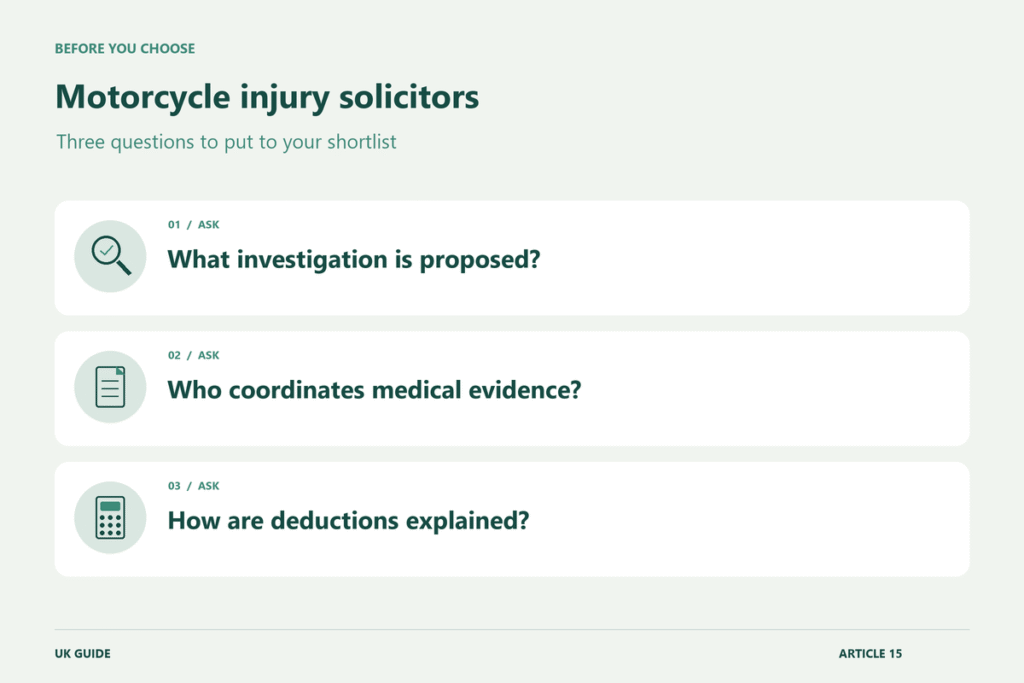
- What investigation is proposed?
- Who coordinates medical evidence?
- How are deductions explained?
A point that is easy to miss
Online compensation examples cannot establish your claim’s value. Ask the solicitor which individual facts need assessment before discussing any realistic financial range.
Put the comparison into practice
Ask the solicitor how it would distinguish the initial account from evidence gathered later. A motorcycle collision enquiry may contain questions that cannot be answered during intake, and the team should make those limits clear. Compare how candidates explain the next investigation tasks and the information they would need to review the practical effects of injury.
Use the same service questions for every firm: who handles the file, who explains new findings and how can appointments accommodate treatment or limited transport? Ask for the charging terms and possible deductions in writing. If a solicitor quotes an outcome from another matter, ask which facts would need to be comparable before it could be relevant. Do not use a past result as the financial foundation for deciding whether to instruct the firm.
Make the final decision from the written offer
Request a proposal that reflects the circumstances you actually discussed. Check the name of the contracting organisation, the work included, the charging basis and the person responsible for answering questions. Resolve any important difference between the conversation and the documents before proceeding. Keep a dated copy of the version you accept. If an essential assumption remains uncertain, ask what evidence would settle it and how that uncertainty could affect your next step.
Further reading
Related reading
- Car Accident Claims: How to Compare Personal Injury Solicitors (UK)
- Rideshare Accident Lawyers: What to Ask Before Hiring an Uber or Lyft Attorney (USA)
- How to Choose a Motorcycle Accident Attorney for a Serious Injury Claim (USA)
- Car Accident Lawyer Fees: Comparing Contingency Costs and Case Expenses (USA)
Explore more in Car and Motorcycle Accidents.