Compare personal injury firms as working teams, not simply as collections of online reviews. Ask who will investigate your incident, communicate with you and explain important decisions. Then compare the written scope and charging terms against the needs identified during the consultation.
The decision this article helps you make
Use a consistent set of questions about responsibility, staffing and expenses. Note whether each firm gives a case-specific answer or falls back on general statements about its size and reputation.
Give the legal team facts it can assess
Create a short account of the incident, the people or organisations involved and the effects you have experienced. Keep existing records separate from recollections that still need checking. Bring questions about missing documents to the consultation rather than making assumptions about what they would show. The purpose is to support a professional assessment, not to produce a persuasive narrative before the evidence has been reviewed.
Compare the proposed evidence work
Ask how each firm would investigate the circumstances, assess responsibility and document the consequences of the injury. Request an explanation of which tasks are routine and which may require outside specialists. If the firm cites experience with similar cases, ask what makes that experience relevant to the uncertainties in yours. A broad practice description does not show how an individual matter would be handled.
Clarify the financial arrangement
Get the proposed charging basis, expenses and possible deductions explained together. Ask what happens if the scope changes, representation ends or the claim produces no payment. Do not import a fee percentage or an outcome from someone else’s case. The agreement you are considering needs to make sense on its own, including who approves spending and how the eventual financial statement would be presented.
Compare continuity and communication
Find out whether the person at the consultation would remain involved and who makes substantive legal decisions. Ask how progress updates would be delivered and how urgent questions would reach the responsible lawyer. Consider accessibility, language and the practical demands of appointments. Clear communication does not guarantee an outcome, but it helps you understand decisions as the evidence develops and reduces the risk of accepting a commitment you did not recognise.
Compare the alternatives on the same basis
Choose the decision criteria before looking at promotional claims. Write down the outcome you need, the constraints you cannot change and the circumstances that would make an option unsuitable. Send the same basic requirements to each organisation. Otherwise, you may spend time comparing answers to different questions. A short comparison with clear assumptions is more useful than a long list of features that do not affect your decision.
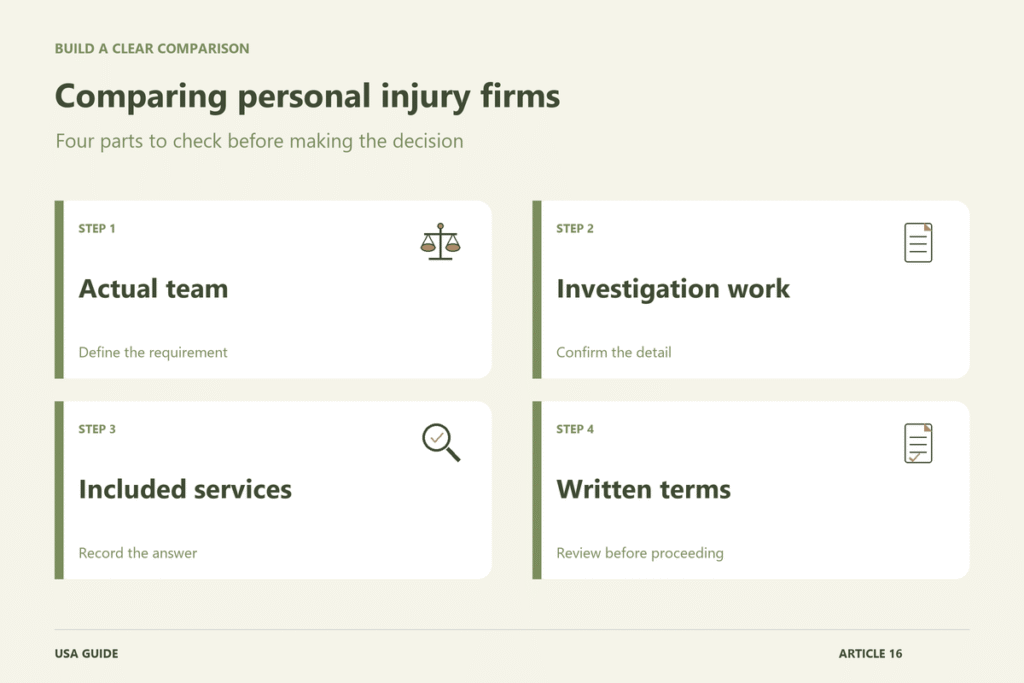
Separate confirmed information from impressions. Written scope, disclosed charges and an identified delivery team belong in the first group. A persuasive conversation or an attractive website belongs in the second. Both can influence your experience, but they should not carry the same weight. Where an answer is missing, leave a visible gap rather than filling it with an optimistic assumption. Ask a follow-up question that could resolve the uncertainty.
Finally, test your preferred option against a plausible difficulty: a delay, a change in scope, an unavailable contact or an unexpected additional cost. Ask how the agreement would handle that situation. This can reveal important differences that a simple price ranking hides. Choose the option whose commitments and limitations you understand, and record why it fits your needs. If the essential information is still missing, improve the comparison before treating the shortlist as a final decision.
Apply the comparison to your location
Use the state relevant to your situation when checking a provider’s qualifications and the terms of an offer. A national advertisement does not establish that the advertised service is available on the same terms where you live. Record the legal name of the organisation you would contract with, the office responsible for delivery and the date of its proposal. Ask which state-specific conditions affect your comparison. Keep personal identifiers out of initial comparison emails; use a verified secure channel when supporting documents are actually needed.
Questions to put to your shortlist
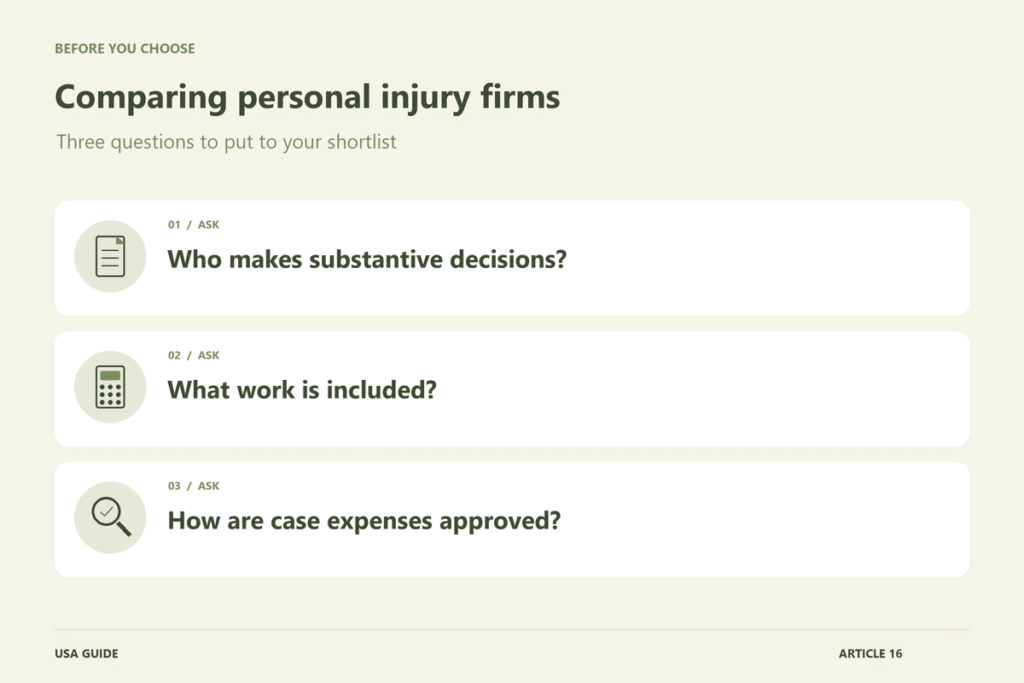
- Who makes substantive decisions?
- What work is included?
- How are case expenses approved?
A point that is easy to miss
A well-known brand may use different teams for different matters. Confirm the team and service arrangements offered to you rather than assuming all clients receive the same support.
Put the comparison into practice
Ask each firm to identify the legal professional responsible for your matter and the person who would handle everyday communication. Then request a short description of the proposed investigation and the first decisions you would face. This makes staffing and scope visible before you compare charging arrangements or promotional claims.
Look for consistency between the consultation and engagement documents. If the firm described specialist investigation or regular attorney contact, ask where that service is reflected in the proposal. Identify any referral to another office or organisation and establish whether the same terms continue to apply. A comparison based on the actual team, expected work and financial arrangement is easier to revisit later than a decision based on a review score or a general promise of personal attention.
Further reading
Related reading
- Slip-and-Fall Attorney Fees: Legal Costs and Questions to Ask (USA)
- Catastrophic Injury Lawyers: Comparing Experience and Case Resources (USA)
- Personal Injury Solicitors: Comparing Success Fees and Service (UK)
- Serious Injury Claims: How to Choose a Specialist Legal Team (UK)
Explore more in Personal Injury.