Tax investigation insurance should be assessed by the professional costs it may cover and the conditions that limit protection. Ask how the policy relates to the tax affairs and adviser involved. Do not assume the policy pays the underlying tax or every expense associated with an enquiry.
The decision this article helps you make
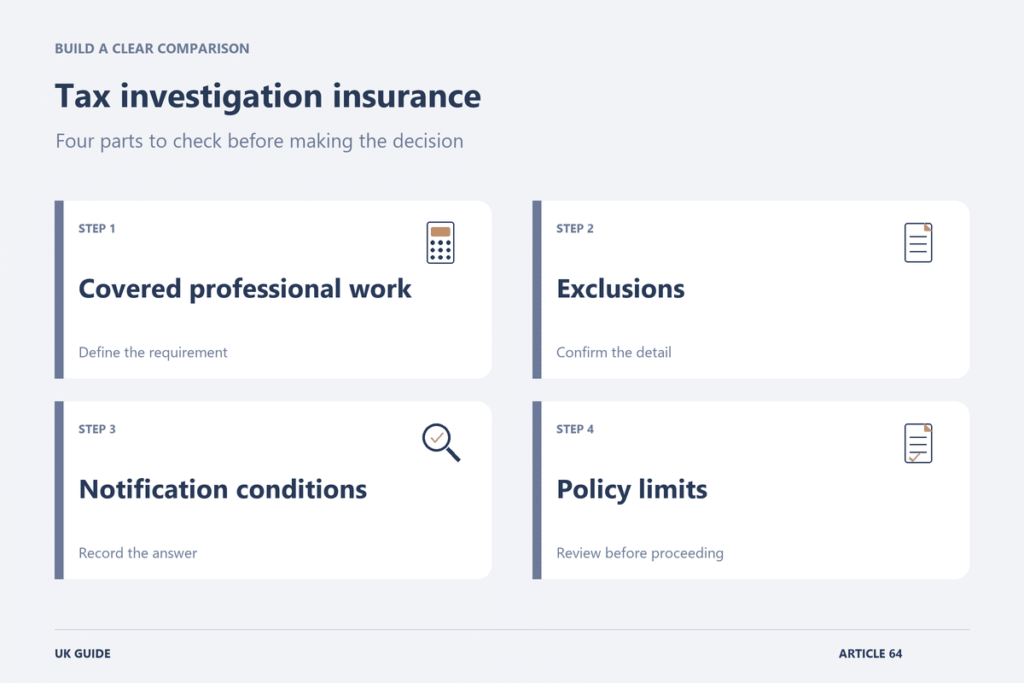
Compare the covered work, reporting requirements, exclusions and any limits on appointing an adviser. Ask how an existing issue or late notification would be treated under the proposed wording.
Identify the problem before choosing a service
Separate preparing a return, answering an enquiry, resolving a dispute and dealing with unaffordable debt. These are different tasks and may require different expertise. Gather the relevant notices, dates, balances and records without sending sensitive documents to an unverified contact. Ask a prospective adviser what it can assess from an initial summary and what would require a formal engagement.
Compare the professional role and scope
Ask who would do the work, which qualifications are relevant and what representation or negotiation the service actually includes. A marketing company, an adviser and the professional authorised to act may have different roles. Have those roles explained. Request a written scope identifying the agencies or creditors involved, the work proposed and the issues requiring separate assistance.
Avoid measuring the offer by a promised result
Ask for an assessment of the options and their conditions rather than a guaranteed reduction in a balance or liability. A provider cannot establish an individual outcome merely by quoting a success story from another client. Compare fees, possible additional costs and the consequences if the proposed route is unavailable. If payments to an existing creditor may be affected, obtain an independent explanation of the risks before changing them.
Review alternatives before paying for help
Ask whether direct contact, an official process or free independent guidance could address some of the problem. Paid assistance may be useful when it brings appropriate expertise or representation, but understand what it adds. Keep notices and deadlines visible and ask a qualified professional about any time-sensitive issue promptly. The comparison should help you identify an appropriate route, not create pressure to buy a service before the basic facts are understood.
Examine what the package actually includes
Translate every broad description into an observable deliverable. Words such as comprehensive, premium and fully managed are not a substitute for an explanation of what the organisation will do. Ask for the tasks, the responsible people, the expected output and any conditions that limit delivery. The objective is to make the offer specific enough that you can recognise both completion and an omission.
Look carefully at the boundary between the main provider and third parties. A package may depend on another professional, a separate supplier or a product with its own terms. Ask who selects that third party, who receives the invoice and who responds if something goes wrong. Identify which commitments belong in your main agreement and which require separate confirmation. Do not assume that a referral automatically includes responsibility for the referred service.
Then check how changes are handled. Ask whether additional work needs your approval, how its price would be disclosed and what happens if you decline. A package can still be useful when it has exclusions, provided those exclusions are understandable and compatible with your needs. Compare the proposed scope against your own requirements rather than rewarding the longest feature list. Pay particular attention to the part of the service you would find hardest to replace yourself.
Apply the comparison to your location
UK-wide marketing can conceal differences between the services available in England, Wales, Scotland and Northern Ireland. Identify the nation relevant to your circumstances and ask the provider to explain any local limitations. Where regulation applies, check the appropriate register and the firm’s contact details independently. Registration is a starting check, not a promise of a particular outcome. Ask whether the quoted amount includes VAT where applicable, which organisation would take your payment and which complaints process applies to that specific service.
Questions to put to your shortlist
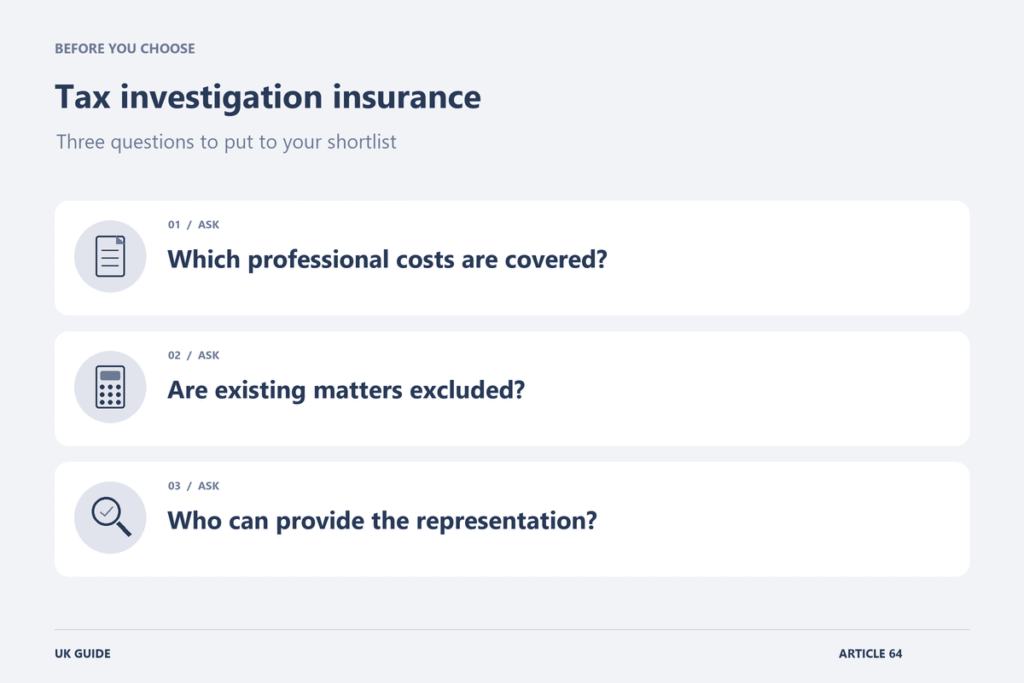
- Which professional costs are covered?
- Are existing matters excluded?
- Who can provide the representation?
A point that is easy to miss
The label tax investigation insurance does not define the benefit. Ask the provider to distinguish insured advisory costs from any tax, interest or penalties you may separately owe.
Put the comparison into practice
Ask the provider to take a hypothetical enquiry and identify the professional work that would be covered, the relevant limit and any condition affecting a claim. Then ask which amounts would remain outside the policy. Keep advisory or representation costs separate from the underlying tax position so that the benefit is not misunderstood.
Check the procedure for reporting a matter and choosing a representative. Ask about an issue already known when the policy is taken out and how that affects the proposed cover. If insurance is supplied through an accountant or another organisation, establish who provides the policy and where the full wording can be read. Compare that wording with the existing service agreement rather than assuming the same fees are automatically covered under both arrangements.
Make the final decision from the written offer
Request a proposal that reflects the circumstances you actually discussed. Check the name of the contracting organisation, the work included, the charging basis and the person responsible for answering questions. Resolve any important difference between the conversation and the documents before proceeding. Keep a dated copy of the version you accept. If an essential assumption remains uncertain, ask what evidence would settle it and how that uncertainty could affect your next step.
Further reading
Related reading
- Insolvency Practitioners: Comparing Business Debt Services and Fees (UK)
- Debt Settlement Companies: Comparing Fees, Risks and Alternatives (USA)
- IRS Tax Debt Attorneys vs Enrolled Agents: Comparing Services and Costs (USA)
- Tax Relief Companies: Comparing Fees, Services and Credentials (USA)
Explore more in Tax and Debt.