Debt settlement should be compared with its risks and alternatives, not simply an advertised reduction in balances. Ask how the service would work, which debts it addresses and what happens if a creditor does not agree. Seek an independent explanation before changing payments on existing accounts.
The decision this article helps you make
Compare the fee structure, account arrangements and possible consequences for collections, credit and tax. Ask what happens if the programme cannot deliver an acceptable agreement for every enrolled debt.
Identify the problem before choosing a service
Separate preparing a return, answering an enquiry, resolving a dispute and dealing with unaffordable debt. These are different tasks and may require different expertise. Gather the relevant notices, dates, balances and records without sending sensitive documents to an unverified contact. Ask a prospective adviser what it can assess from an initial summary and what would require a formal engagement.
Compare the professional role and scope
Ask who would do the work, which qualifications are relevant and what representation or negotiation the service actually includes. A marketing company, an adviser and the professional authorised to act may have different roles. Have those roles explained. Request a written scope identifying the agencies or creditors involved, the work proposed and the issues requiring separate assistance.
Avoid measuring the offer by a promised result
Ask for an assessment of the options and their conditions rather than a guaranteed reduction in a balance or liability. A provider cannot establish an individual outcome merely by quoting a success story from another client. Compare fees, possible additional costs and the consequences if the proposed route is unavailable. If payments to an existing creditor may be affected, obtain an independent explanation of the risks before changing them.
Review alternatives before paying for help
Ask whether direct contact, an official process or free independent guidance could address some of the problem. Paid assistance may be useful when it brings appropriate expertise or representation, but understand what it adds. Keep notices and deadlines visible and ask a qualified professional about any time-sensitive issue promptly. The comparison should help you identify an appropriate route, not create pressure to buy a service before the basic facts are understood.
Compare the alternatives on the same basis
Choose the decision criteria before looking at promotional claims. Write down the outcome you need, the constraints you cannot change and the circumstances that would make an option unsuitable. Send the same basic requirements to each organisation. Otherwise, you may spend time comparing answers to different questions. A short comparison with clear assumptions is more useful than a long list of features that do not affect your decision.
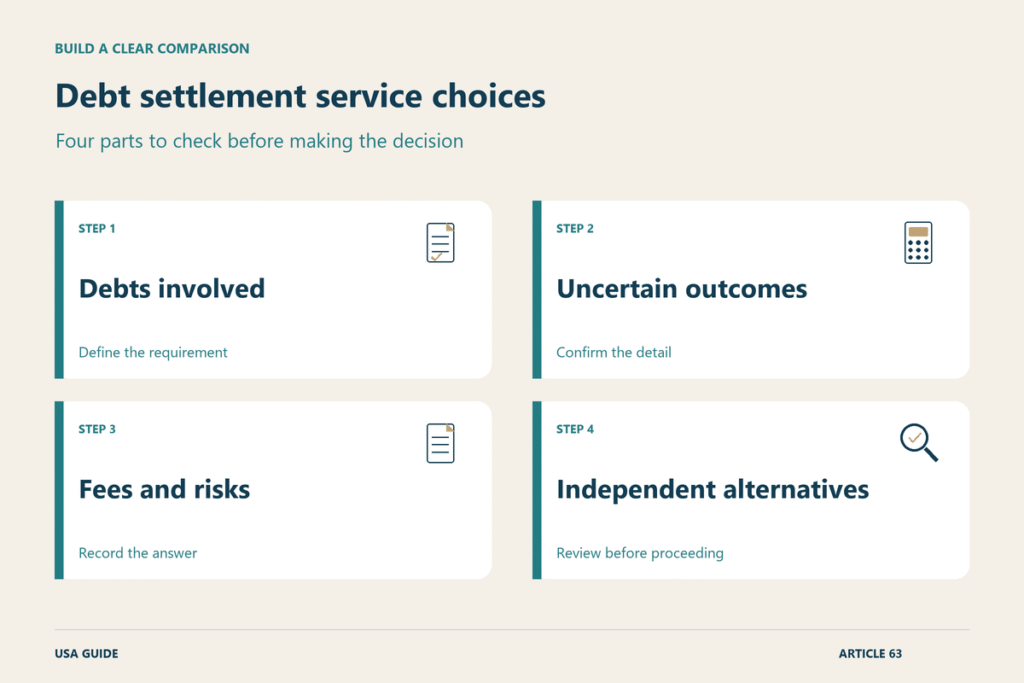
Separate confirmed information from impressions. Written scope, disclosed charges and an identified delivery team belong in the first group. A persuasive conversation or an attractive website belongs in the second. Both can influence your experience, but they should not carry the same weight. Where an answer is missing, leave a visible gap rather than filling it with an optimistic assumption. Ask a follow-up question that could resolve the uncertainty.
Finally, test your preferred option against a plausible difficulty: a delay, a change in scope, an unavailable contact or an unexpected additional cost. Ask how the agreement would handle that situation. This can reveal important differences that a simple price ranking hides. Choose the option whose commitments and limitations you understand, and record why it fits your needs. If the essential information is still missing, improve the comparison before treating the shortlist as a final decision.
Apply the comparison to your location
Use the state relevant to your situation when checking a provider’s qualifications and the terms of an offer. A national advertisement does not establish that the advertised service is available on the same terms where you live. Record the legal name of the organisation you would contract with, the office responsible for delivery and the date of its proposal. Ask which state-specific conditions affect your comparison. Keep personal identifiers out of initial comparison emails; use a verified secure channel when supporting documents are actually needed.
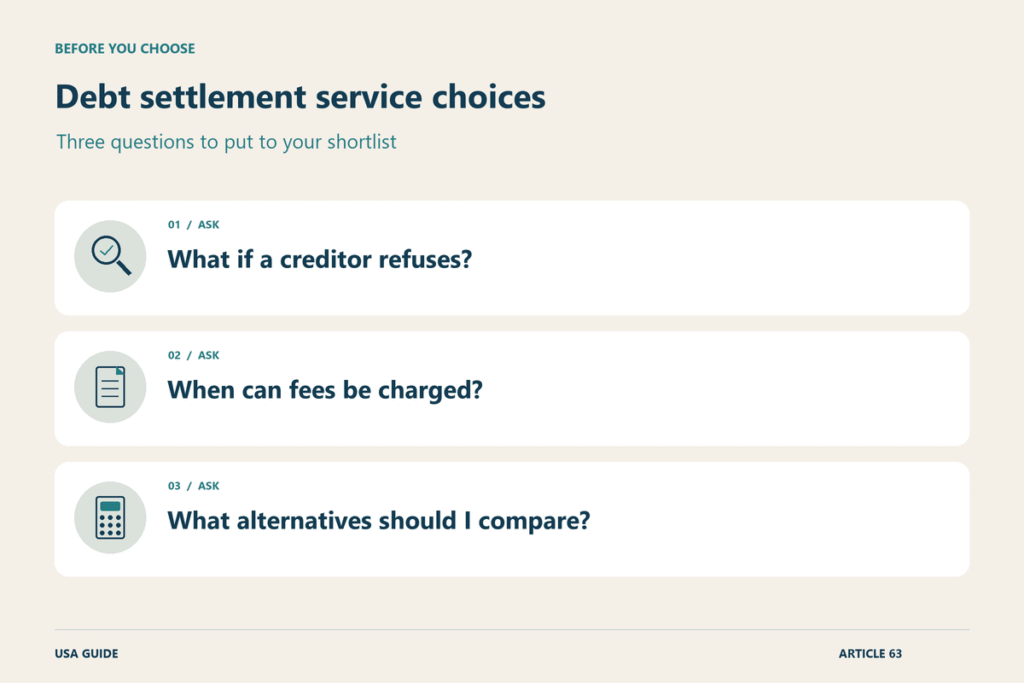
Questions to put to your shortlist
- What if a creditor refuses?
- When can fees be charged?
- What alternatives should I compare?
A point that is easy to miss
A projected settlement is not a creditor agreement. Understand the uncertainty and the effects of any missed payments before relying on a marketing estimate of savings.
Put the comparison into practice
Ask the provider to explain what happens when one creditor does not accept a proposed settlement. Include that possibility in the budget and risk discussion instead of comparing only a projected successful programme. Request the actual fee and account terms, and ask when charges may become payable under the service being offered.
Before changing payments, obtain an independent explanation of potential consequences, including collection activity, credit effects and possible tax issues. Compare appropriate direct arrangements, counselling or other debt-help options as well. A provider’s projected saving should not be treated as money already secured. You need to understand what remains uncertain, what happens to unresolved debts and which obligations continue while negotiations are attempted, rather than relying on a percentage reduction used in advertising.
Make the final decision from the written offer
Request a proposal that reflects the circumstances you actually discussed. Check the name of the contracting organisation, the work included, the charging basis and the person responsible for answering questions. Resolve any important difference between the conversation and the documents before proceeding. Keep a dated copy of the version you accept. If an essential assumption remains uncertain, ask what evidence would settle it and how that uncertainty could affect your next step.
Further reading
Related reading
- IRS Tax Debt Attorneys vs Enrolled Agents: Comparing Services and Costs (USA)
- Tax Relief Companies: Comparing Fees, Services and Credentials (USA)
- Tax Investigation Insurance: Comparing Cover, Exclusions and Costs (UK)
- Insolvency Practitioners: Comparing Business Debt Services and Fees (UK)
Explore more in Tax and Debt.