A business comparing ransomware recovery services needs a clear incident-response scope, secure communication and an explanation of who will do the work. Avoid choosing a supplier on a guaranteed recovery claim. Coordinate the decision with your existing security, legal and insurance contacts where relevant.
The decision this article helps you make
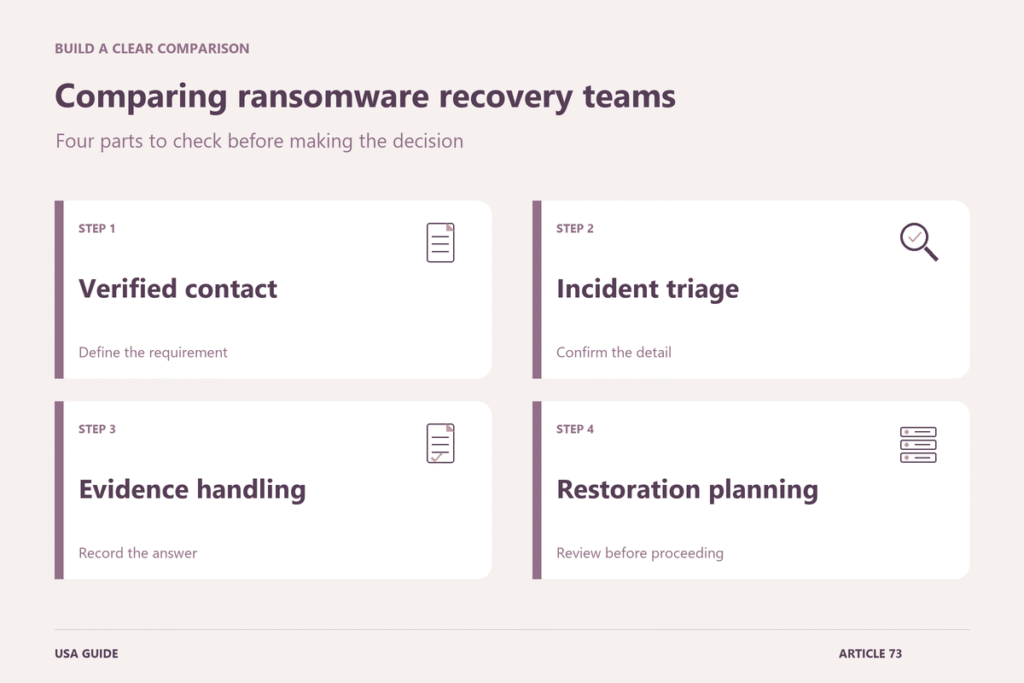
Ask about triage, evidence handling, restoration planning and the basis of charges. Do not send compromised credentials or sensitive incident material through an unverified sales channel.
Define the service boundary first
List the systems, information and business activities the provider would support. Identify what your own team manages and what you expect the supplier to take over. Hosting, backup, security monitoring and incident recovery are related services, but they are not interchangeable. Ask the supplier to describe its responsibility for each rather than assuming that one managed package covers every operational need.
Compare capacity with recovery expectations
For an ordinary service, define acceptable performance and the work required when something fails. Ask what the provider measures, how an incident is reported and which support response is promised. A response target is different from a guarantee that the problem will be resolved within that period. Check the exact commitment and the conditions affecting it before using an availability figure as a purchasing shortcut.
Examine access and evidence
Ask how privileged access is granted, reviewed and removed. Establish who can make changes and what records of those changes you could obtain. If the provider handles sensitive information, involve appropriate security and legal reviewers in the comparison. Do not send production credentials or confidential records during an informal sales enquiry. Agree a suitable process before giving a supplier access to live systems.
Understand the contract and the exit
Request a cost breakdown covering setup, ongoing service, additional usage, incident work and any migration support. Ask what data and documentation would be returned at the end of the relationship and how that return would be tested. A backup or recovery claim becomes more useful when a controlled restoration demonstrates what is actually available. Compare practical responsibilities and tested procedures rather than relying only on brand recognition or a long list of security terms.
Test the provider before making the commitment
Turn the first conversation into a practical assessment. Describe your circumstances briefly, then ask the provider to explain its proposed approach, the information still missing and the next decision you would face. A useful explanation separates what can be confirmed now from what needs investigation. Record those answers immediately so that confident presentation does not become a substitute for substance when you compare candidates later.
Ask who would actually do the work. The person who handles an initial enquiry may have a different role from the person responsible for delivery. Find out how you would reach the responsible professional, what happens during an absence and when progress updates would arrive. Request examples of the documents or reports you would receive, with identifying information removed. This tests the service you would experience rather than the quality of the sales pitch.
Then examine the conditions for leaving. Ask how records, work already completed, outstanding charges and any ongoing responsibilities would be handled if the relationship ended. The answer matters even when you expect to stay. A provider that can explain its boundaries, handover arrangements and unresolved issues gives you a more usable basis for selection than one that simply promises an effortless outcome.
Apply the comparison to your location
Use the state relevant to your situation when checking a provider’s qualifications and the terms of an offer. A national advertisement does not establish that the advertised service is available on the same terms where you live. Record the legal name of the organisation you would contract with, the office responsible for delivery and the date of its proposal. Ask which state-specific conditions affect your comparison. Keep personal identifiers out of initial comparison emails; use a verified secure channel when supporting documents are actually needed.
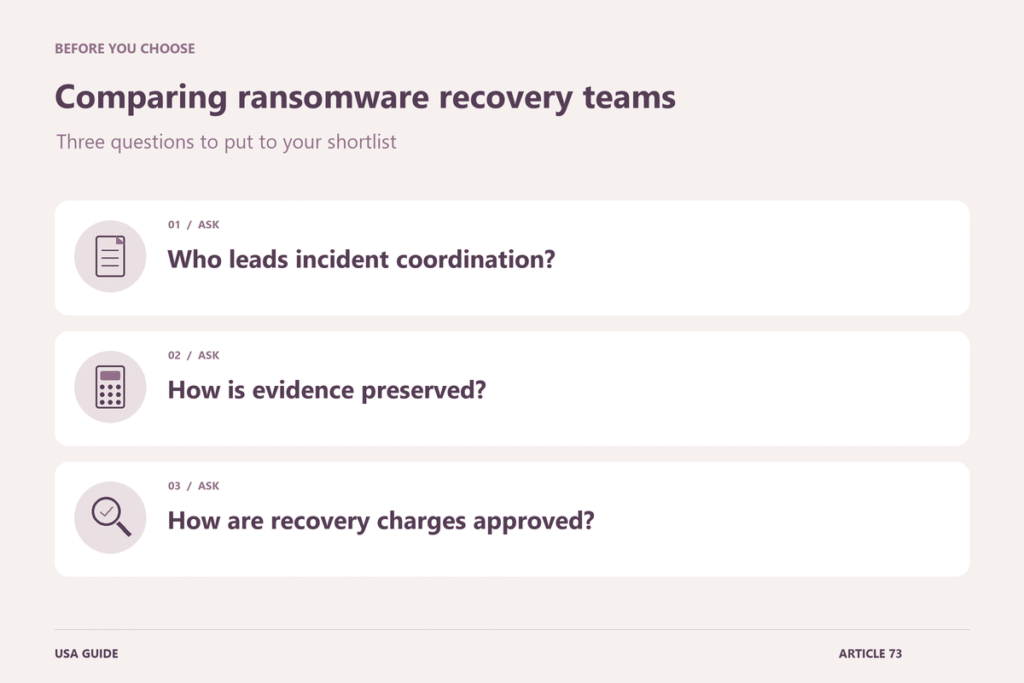
Questions to put to your shortlist
- Who leads incident coordination?
- How is evidence preserved?
- How are recovery charges approved?
A point that is easy to miss
An advertised response time is not a guarantee of restoration. Ask what the provider can commit to, which factors remain uncertain and how those uncertainties affect the proposed work.
Put the comparison into practice
Ask a prospective recovery provider to explain its incident triage, evidence-handling process and restoration planning without requiring an unsafe or premature transfer of access. Establish a verified communication channel and identify the people authorised to approve work. Coordinate with the business’s existing security team, legal advisers and insurer where applicable so that independent decisions do not conflict.
Compare the basis of charges and what each proposed stage would deliver. Ask how the provider reports uncertainty about recoverability and avoids representing a response target as a restoration guarantee. Have the team explain how recovered systems and information would be assessed before normal operation resumes. The service should support a controlled response to the actual incident, not pressure the business into buying a promised outcome that has not been investigated.
Make the final decision from the written offer
Request a proposal that reflects the circumstances you actually discussed. Check the name of the contracting organisation, the work included, the charging basis and the person responsible for answering questions. Resolve any important difference between the conversation and the documents before proceeding. Keep a dated copy of the version you accept. If an essential assumption remains uncertain, ask what evidence would settle it and how that uncertainty could affect your next step.
Further reading
Related reading
- Dedicated Server Hosting Providers: Comparing Hardware, SLAs and Costs (USA)
- Managed WordPress Hosting for Businesses: Comparing Pricing and Support (USA)
- Managed Cybersecurity Providers for Small Businesses: Comparing Services and Costs (UK)
- Business Cloud Backup Services: Comparing Storage, Recovery and Pricing (UK)
Explore more in Hosting and Cybersecurity.