When comparing medical malpractice attorney fees, ask about the investigation expenses as well as the professional charging arrangement. Clinical records and specialist assessments can raise separate cost questions. The agreement should explain how spending is authorised and allocated without relying on a predicted case outcome.
The decision this article helps you make
Request a written distinction between attorney fees, record costs and outside expert work. Ask what happens financially if an initial review does not support further action.
Separate a concern about care from a legal assessment
Prepare a chronology of the care received, the concern you want assessed and the effects you experienced. Identify the records already available and the questions you want a professional to investigate. An upsetting outcome does not, on its own, answer the legal questions. Ask the legal team to explain the assessment required without expecting a general article or a brief intake conversation to determine liability.
Ask how medical evidence would be reviewed
Find out who would organise records and decide whether independent clinical expertise is needed. Ask how the team would identify the relevant speciality and explain the questions put to an expert. You do not need to interpret technical records yourself to compare firms. You do need an understandable explanation of the investigative steps, their purpose and the points at which the assessment could change.
Compare funding with the proposed investigation
Medical evidence work can create questions about outside spending and the scope of representation. Ask which costs are anticipated, who approves them and how they would be treated if the matter does not proceed. Request an explanation of any separate funding arrangements rather than assuming that all work is covered by the same advertising slogan. Keep questions about legal costs distinct from decisions about your ongoing healthcare.
Check who will explain difficult findings
Ask how the team communicates when expert opinion does not support an initial concern or when further information is needed. A credible service should make room for uncertainty and unwelcome findings. Compare the named lawyer’s role, supervision and accessibility, particularly if the person affected needs communication support. Seek clinical advice for treatment decisions; selecting a legal representative is a separate task from determining which medical care is appropriate.
Build a complete cost comparison
Start with a written breakdown rather than a headline amount. Separate the initial commitment, the main charge, payments to other organisations and any optional additions. Ask which figures are fixed, which are estimates and which depend on decisions that have not been made. Put the assumptions beside the numbers. Two apparently different prices may describe different amounts of work, while two identical prices may leave you with very different obligations.
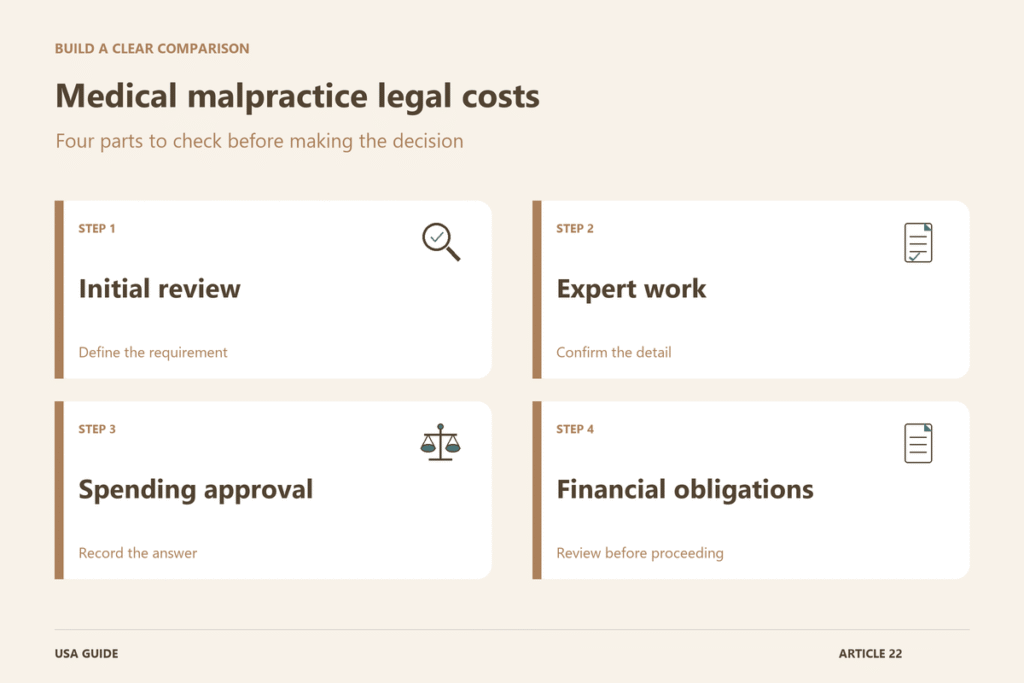
Next, ask the provider to walk through a realistic change in circumstances. What happens if the work takes longer, an additional service becomes necessary or you decide to stop? Request an explanation of how a revised price would be approved and when you would be told. Do not treat an unknown amount as zero simply because it is missing from a quotation. Mark it as unresolved until you receive a useful answer.
Compare the total commitment over the period that matters to you. An introductory saving may be outweighed by later charges; an apparently expensive proposal may include work that another proposal bills separately. The aim is to understand those differences, not to make every offer look identical. Keep the original proposal, the provider’s clarifications and the final agreement together so that you can check what changed before authorising payment or signing.
Apply the comparison to your location
Use the state relevant to your situation when checking a provider’s qualifications and the terms of an offer. A national advertisement does not establish that the advertised service is available on the same terms where you live. Record the legal name of the organisation you would contract with, the office responsible for delivery and the date of its proposal. Ask which state-specific conditions affect your comparison. Keep personal identifiers out of initial comparison emails; use a verified secure channel when supporting documents are actually needed.
Questions to put to your shortlist
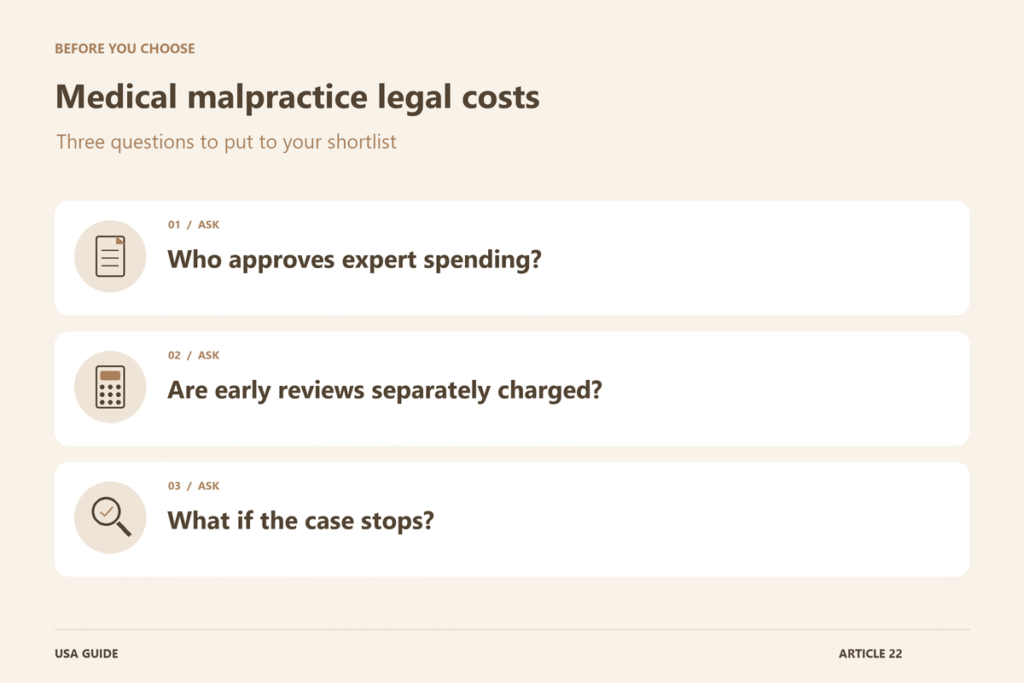
- Who approves expert spending?
- Are early reviews separately charged?
- What if the case stops?
A point that is easy to miss
A firm should be able to explain its agreement without promising a recovery. Use hypothetical calculations only to understand cost allocation, not as forecasts of compensation.
Put the comparison into practice
Request a cost map for the initial review and any later investigation. Identify who would obtain records, which questions may need specialist input and when the firm would decide whether to commission it. Ask how those expenses are reported and whether your approval is needed before an instruction is placed.
Then test the financial explanation against a review that does not support continuing. Ask which obligations, if any, remain under the actual agreement and how any money already paid or advanced would be treated. A worked example should distinguish professional fees from other expenditure without presenting a successful recovery as certain. Compare candidates using the same assumed tasks so that an apparently lower fee is not simply the result of omitting a substantial part of the investigative work.
Further reading
Related reading
- How to Choose a Medical Malpractice Lawyer (USA)
- Birth Injury Law Firms: What Families Should Compare Before Hiring (USA)
- Clinical Negligence Solicitors: Comparing Fees, Funding and Experience (UK)
- Private Hospital Negligence Claims: Choosing a Specialist Solicitor (UK)
Explore more in Medical Malpractice and Clinical Negligence.