A remortgage comparison should include product fees, broker costs and any charges connected with leaving the existing arrangement. Ask how the proposed deal changes payments and the remaining debt over the period that matters to you. The cheapest introductory rate may not have the lowest relevant overall cost.
The decision this article helps you make
Ask the adviser to show equivalent options with fees paid separately and, where offered, added to the loan. Check timing and any current-loan charges before treating a proposed switch as a saving.
Establish the same comparison assumptions
Describe the property, borrowing amount, intended term and purpose consistently when requesting mortgage information. Ask what remains subject to valuation, underwriting or other checks. Rates and fees offered to one borrower do not establish what another borrower will receive. Keep the date of each proposal visible so that a change in market pricing is not confused with a difference between lenders.
Examine both upfront and ongoing costs
Compare the interest structure, scheduled payments, lender or product fees, broker charges and other amounts needed to complete the transaction. Ask which charges are added to the balance and which are paid separately. Request an explanation of what happens at the end of any initial pricing period. A small difference in the starting payment may conceal a larger difference in the commitment over the period you expect to keep the loan.
Test changes in your plans
Ask how the agreement handles early repayment, additional payments, moving or refinancing again. Where rates or payments can change, have the lender explain the mechanism and how a less favourable scenario would affect affordability. Do not use a simple payment saving as the only comparison if the new proposal extends the debt or changes the type of security involved.
Match the documents to the proposal
Request the appropriate formal information for the product and jurisdiction being considered. In a US mortgage comparison, use the relevant Loan Estimates to examine equivalent terms rather than treating a promotional rate as the full offer. In a UK comparison, ask the adviser to explain the applicable illustration and recommendation. Before proceeding, resolve differences in assumptions, costs and timing, and check that the eventual documents describe the loan you intended to compare.
Build a complete cost comparison
Start with a written breakdown rather than a headline amount. Separate the initial commitment, the main charge, payments to other organisations and any optional additions. Ask which figures are fixed, which are estimates and which depend on decisions that have not been made. Put the assumptions beside the numbers. Two apparently different prices may describe different amounts of work, while two identical prices may leave you with very different obligations.
Next, ask the provider to walk through a realistic change in circumstances. What happens if the work takes longer, an additional service becomes necessary or you decide to stop? Request an explanation of how a revised price would be approved and when you would be told. Do not treat an unknown amount as zero simply because it is missing from a quotation. Mark it as unresolved until you receive a useful answer.
Compare the total commitment over the period that matters to you. An introductory saving may be outweighed by later charges; an apparently expensive proposal may include work that another proposal bills separately. The aim is to understand those differences, not to make every offer look identical. Keep the original proposal, the provider’s clarifications and the final agreement together so that you can check what changed before authorising payment or signing.
Apply the comparison to your location
UK-wide marketing can conceal differences between the services available in England, Wales, Scotland and Northern Ireland. Identify the nation relevant to your circumstances and ask the provider to explain any local limitations. Where regulation applies, check the appropriate register and the firm’s contact details independently. Registration is a starting check, not a promise of a particular outcome. Ask whether the quoted amount includes VAT where applicable, which organisation would take your payment and which complaints process applies to that specific service.
Questions to put to your shortlist
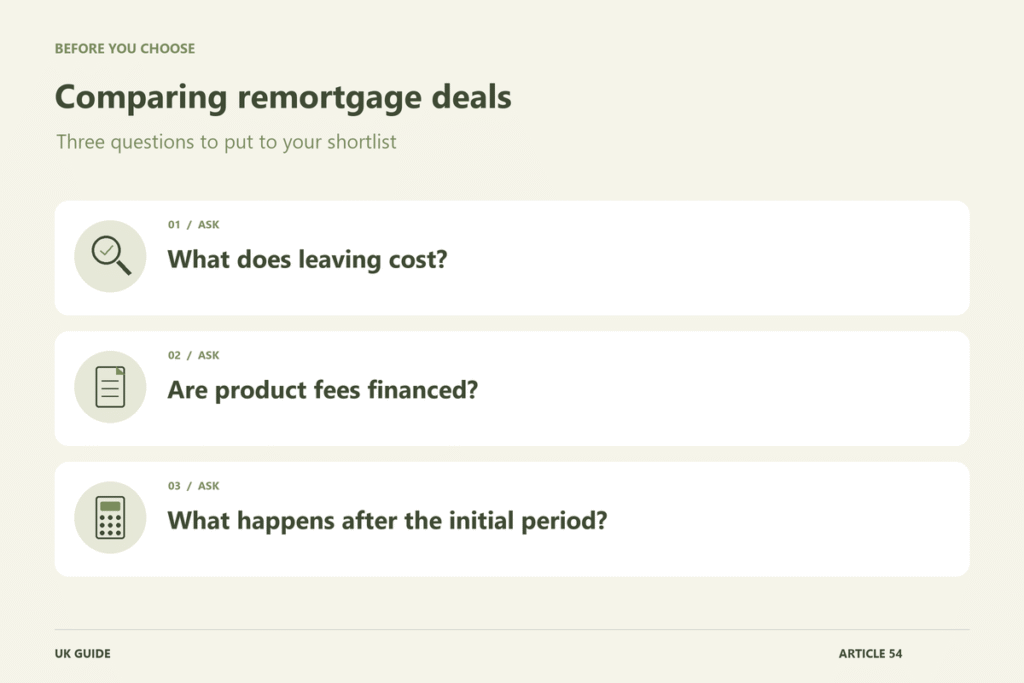
- What does leaving cost?
- Are product fees financed?
- What happens after the initial period?
A point that is easy to miss
Spreading an upfront fee into the mortgage can change its eventual cost. Ask the adviser to explain the effect on the balance and repayments rather than comparing only the cash needed today.
Put the comparison into practice
Ask the adviser to compare equivalent remortgage options over a stated period using the same balance and intended term. Include product and broker fees, costs of leaving the current arrangement and any charges that are added to the borrowing. Make the assumptions explicit so that a lower introductory payment does not hide a different structure.
Review what happens when the initial period ends and what charges could apply if your plans change earlier. Ask about timing so that the comparison reflects the existing loan rather than an assumed exit date. Where a fee is financed, have the effect on the balance explained. The final choice should be based on the actual illustration and circumstances, with individual advice about suitability, rather than a headline rate taken from a general market table.
Further reading
Related reading
- Buy-to-Let Mortgage Brokers: Comparing Fees and Lender Access (UK)
- Jumbo Mortgage Lenders: Comparing Rates, Fees and Requirements (USA)
- HELOC vs Home Equity Loan: Comparing Lender Offers and Fees (USA)
- Mortgage Refinance Lenders: Comparing Rates and Closing Costs (USA)
Explore more in Mortgages.