A buy-to-let broker should explain which lenders and products it considers and how its recommendation relates to the property and applicant. Compare broker charges, lender fees and the proposed borrowing structure. Keep lending advice separate from independent advice on the wider property investment.
The decision this article helps you make
Ask how rental assumptions, ownership structure and existing borrowing affect the comparison. Request an explanation of any limits on lender access and any fee payable before completion.
Establish the same comparison assumptions
Describe the property, borrowing amount, intended term and purpose consistently when requesting mortgage information. Ask what remains subject to valuation, underwriting or other checks. Rates and fees offered to one borrower do not establish what another borrower will receive. Keep the date of each proposal visible so that a change in market pricing is not confused with a difference between lenders.
Examine both upfront and ongoing costs
Compare the interest structure, scheduled payments, lender or product fees, broker charges and other amounts needed to complete the transaction. Ask which charges are added to the balance and which are paid separately. Request an explanation of what happens at the end of any initial pricing period. A small difference in the starting payment may conceal a larger difference in the commitment over the period you expect to keep the loan.
Test changes in your plans
Ask how the agreement handles early repayment, additional payments, moving or refinancing again. Where rates or payments can change, have the lender explain the mechanism and how a less favourable scenario would affect affordability. Do not use a simple payment saving as the only comparison if the new proposal extends the debt or changes the type of security involved.
Match the documents to the proposal
Request the appropriate formal information for the product and jurisdiction being considered. In a US mortgage comparison, use the relevant Loan Estimates to examine equivalent terms rather than treating a promotional rate as the full offer. In a UK comparison, ask the adviser to explain the applicable illustration and recommendation. Before proceeding, resolve differences in assumptions, costs and timing, and check that the eventual documents describe the loan you intended to compare.
Test the provider before making the commitment
Turn the first conversation into a practical assessment. Describe your circumstances briefly, then ask the provider to explain its proposed approach, the information still missing and the next decision you would face. A useful explanation separates what can be confirmed now from what needs investigation. Record those answers immediately so that confident presentation does not become a substitute for substance when you compare candidates later.
Ask who would actually do the work. The person who handles an initial enquiry may have a different role from the person responsible for delivery. Find out how you would reach the responsible professional, what happens during an absence and when progress updates would arrive. Request examples of the documents or reports you would receive, with identifying information removed. This tests the service you would experience rather than the quality of the sales pitch.
Then examine the conditions for leaving. Ask how records, work already completed, outstanding charges and any ongoing responsibilities would be handled if the relationship ended. The answer matters even when you expect to stay. A provider that can explain its boundaries, handover arrangements and unresolved issues gives you a more usable basis for selection than one that simply promises an effortless outcome.
Apply the comparison to your location
UK-wide marketing can conceal differences between the services available in England, Wales, Scotland and Northern Ireland. Identify the nation relevant to your circumstances and ask the provider to explain any local limitations. Where regulation applies, check the appropriate register and the firm’s contact details independently. Registration is a starting check, not a promise of a particular outcome. Ask whether the quoted amount includes VAT where applicable, which organisation would take your payment and which complaints process applies to that specific service.
Questions to put to your shortlist
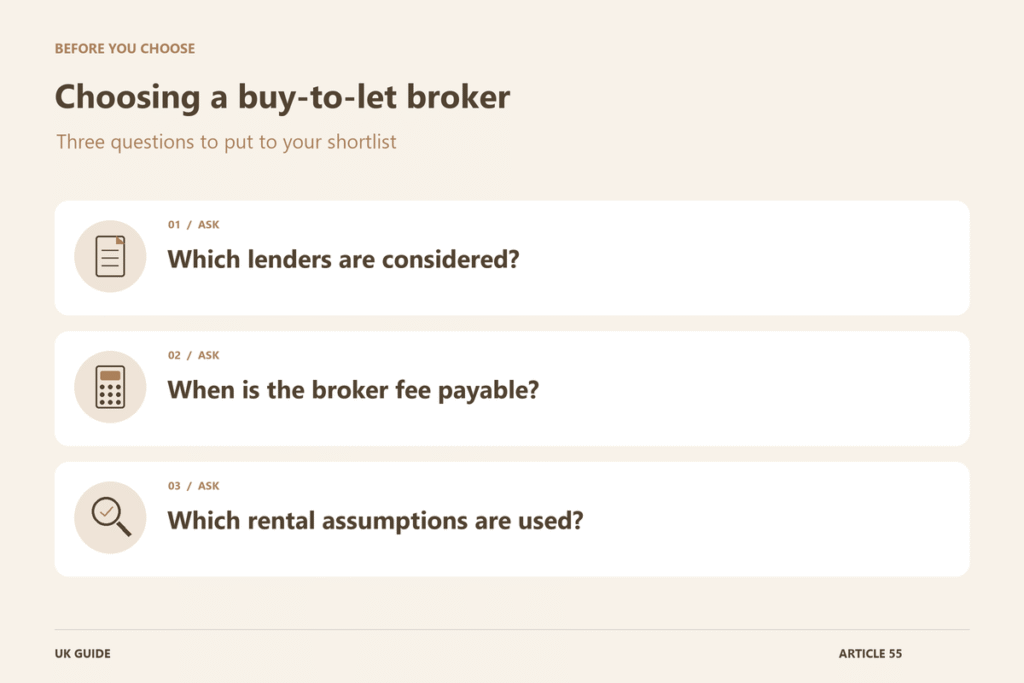
- Which lenders are considered?
- When is the broker fee payable?
- Which rental assumptions are used?
A point that is easy to miss
A mortgage offer does not establish that a property investment will be profitable. Review costs, risks and tax questions separately with appropriate advisers.
Put the comparison into practice
Ask the broker which lenders and product types it considers and whether any relevant part of the market is outside its service. Record how the broker is paid, when a separate fee becomes due and what happens if the application does not complete. Those terms should be clear before the recommendation becomes a financial commitment.
Compare the borrowing assumptions with the property and ownership structure actually being considered. Ask how rental information and other commitments affect the proposal, without assuming a lender’s willingness to lend proves that the investment works commercially. Review ongoing property costs, risks and tax questions separately with appropriate advisers. A useful broker comparison establishes the scope of advice and the actual mortgage terms; it does not replace an independent assessment of the wider investment.
Make the final decision from the written offer
Request a proposal that reflects the circumstances you actually discussed. Check the name of the contracting organisation, the work included, the charging basis and the person responsible for answering questions. Resolve any important difference between the conversation and the documents before proceeding. Keep a dated copy of the version you accept. If an essential assumption remains uncertain, ask what evidence would settle it and how that uncertainty could affect your next step.
Further reading
Related reading
- Remortgage Deals: Comparing Rates, Product Fees and Broker Costs (UK)
- Jumbo Mortgage Lenders: Comparing Rates, Fees and Requirements (USA)
- HELOC vs Home Equity Loan: Comparing Lender Offers and Fees (USA)
- Mortgage Refinance Lenders: Comparing Rates and Closing Costs (USA)
Explore more in Mortgages.