A balance transfer offer should be evaluated using the fee, promotional period and the rate that applies afterwards. Work out a repayment schedule for the actual balance you want to move. A headline introductory rate is not a complete estimate of what the transfer would cost.
The decision this article helps you make
Ask whether the intended balance is eligible and how the approved limit may affect the transfer. Compare the payment needed to clear it within the offer period with what your budget can sustain.
Start with the transactions you actually expect
List the balance, spending or banking activity the product is intended to support. For a business account, include payment types, currencies, cash handling and the people who need access. For credit, identify expected repayment and any promotional period. A reward or introductory offer can be attractive without matching the way you will use the account after the initial period ends.
Convert the fee schedule into a realistic comparison
Ask about recurring charges, transaction fees, interest, transfers and services you may need occasionally. Check the conditions for a promotional benefit and what pricing applies when it ends. Use your expected activity to estimate relevant costs, labelling assumptions clearly. An account described as free may still charge for particular transactions, and a card with an annual fee may or may not justify that cost for your usage.
Understand the provider and the account structure
Identify the legal entity supplying the product and ask which account protections apply to that structure. Do not assume that every financial app operates as a bank or holds money in the same way. Verify relevant details independently and ask how access, fraud reporting and complaints would be handled. For business users, confirm permission controls and how access would be removed when an employee leaves.
Check the transition and the exit
Ask what happens when an introductory offer expires, an account is closed or a balance remains after a promotional period. If you are switching, identify payments and records that need attention before the previous arrangement ends. Save the pricing document and eligibility conditions. The final choice should suit normal use and a less favourable scenario, not simply the best possible interpretation of a bonus or rewards headline.
Build a complete cost comparison
Start with a written breakdown rather than a headline amount. Separate the initial commitment, the main charge, payments to other organisations and any optional additions. Ask which figures are fixed, which are estimates and which depend on decisions that have not been made. Put the assumptions beside the numbers. Two apparently different prices may describe different amounts of work, while two identical prices may leave you with very different obligations.
Next, ask the provider to walk through a realistic change in circumstances. What happens if the work takes longer, an additional service becomes necessary or you decide to stop? Request an explanation of how a revised price would be approved and when you would be told. Do not treat an unknown amount as zero simply because it is missing from a quotation. Mark it as unresolved until you receive a useful answer.
Compare the total commitment over the period that matters to you. An introductory saving may be outweighed by later charges; an apparently expensive proposal may include work that another proposal bills separately. The aim is to understand those differences, not to make every offer look identical. Keep the original proposal, the provider’s clarifications and the final agreement together so that you can check what changed before authorising payment or signing.
Apply the comparison to your location
Use the state relevant to your situation when checking a provider’s qualifications and the terms of an offer. A national advertisement does not establish that the advertised service is available on the same terms where you live. Record the legal name of the organisation you would contract with, the office responsible for delivery and the date of its proposal. Ask which state-specific conditions affect your comparison. Keep personal identifiers out of initial comparison emails; use a verified secure channel when supporting documents are actually needed.
Questions to put to your shortlist
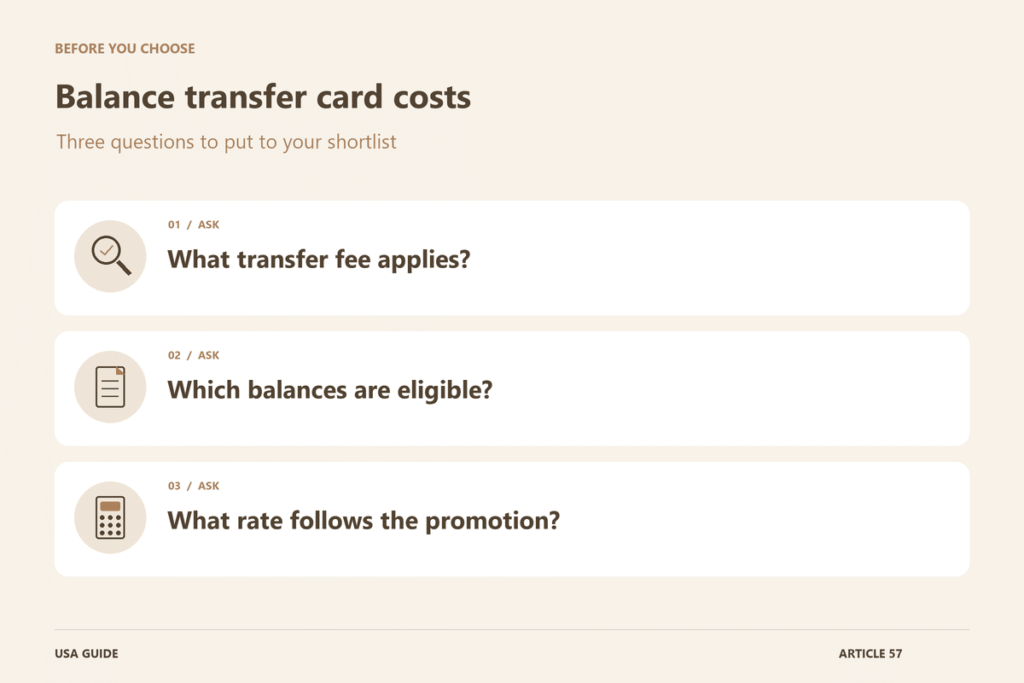
- What transfer fee applies?
- Which balances are eligible?
- What rate follows the promotion?
A point that is easy to miss
A transfer does not eliminate debt. Include a plan for any balance remaining after the promotional period and avoid assuming that another future offer will be available.
Put the comparison into practice
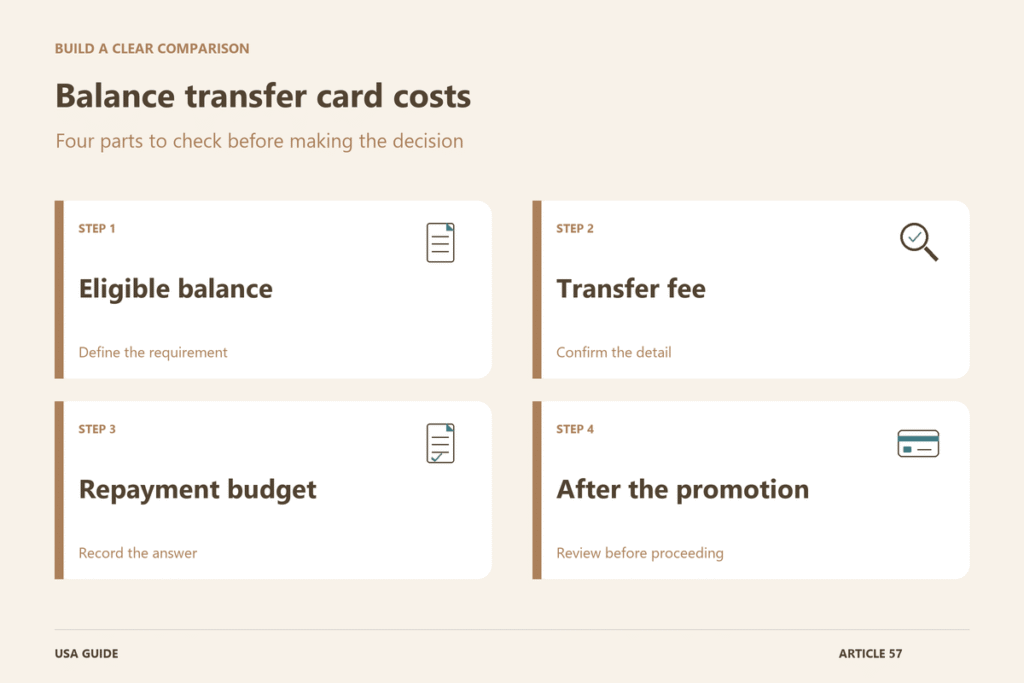
Calculate the transferred balance after including the applicable transfer fee, then divide the amount you intend to clear by the available repayment months as a starting budgeting exercise. Confirm the provider’s actual payment requirements and terms separately. If the budget cannot support clearing the balance, examine the cost of the amount likely to remain after the offer ends.
Ask which balances can be moved and how the approved limit affects the transfer. Check new-purchase pricing and how payments are allocated rather than assuming the promotional terms cover all card activity. A transfer offer can change the cost of existing debt but does not remove it. Compare alternatives and obtain independent help where the repayment remains unaffordable instead of planning around an uncertain future promotional offer.
Further reading
Related reading
- Business Credit Cards: Comparing Rewards, Annual Fees and APRs (USA)
- Business Checking Accounts: Comparing Fees, Bonuses and Cash Deposit Limits (USA)
- Business Bank Accounts for Limited Companies: Comparing Charges and Features (UK)
- Balance Transfer Credit Cards: Comparing Transfer Fees and Promotional Periods (UK)
Explore more in Credit and Banking.